Submit News
 About us
 Advertise
 Contact us


 Aug 10, 2026
  2 min read
 Young cricketers vie for Under-13 spots as DCB tour...
Forty young cricketers from three teams will battle for spots on Demerara’s Under-13 squad when the Demerara Cricket Board’s 2026 Under-13 Tournament...


10 Aug 2026

Forty young cricketers from three teams will battle for spots on Demerara’s Under-13 squad when the Demerara Cricket Board’s 2026 Under-13 Tournament...

Rohan Albert claimed victory in the ENet Golf Tournament at Lusignan Golf Club on Sunday, carding a Gross 90, Handicap 19 and...

The Caribbean Court of Justice (CCJ) has reaffirmed its commitment to judicial independence, integrity and public confidence in the administration of justice,...

 Strategic investments, farmer support drive record gains in agriculture sector


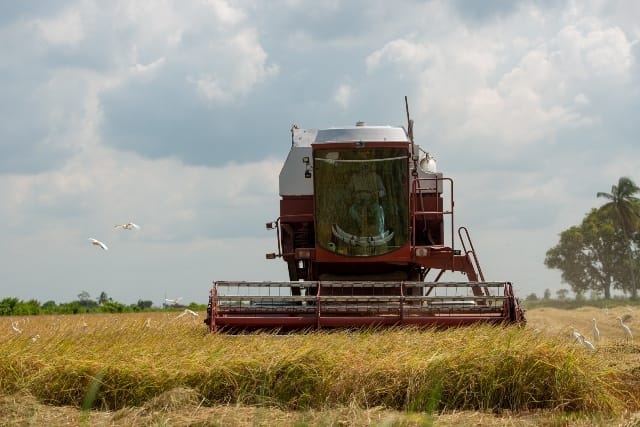
Strategic government investments in modern infrastructure and robust support for farmers continue to fuel remarkable growth across Guyana’s agriculture sector, paving the way for another record-breaking year in rice production.
Speaking at the World Food Day 2025 ceremony on Friday at the Albion Sports Complex, Agriculture Minister, Zulfikar Mustapha, announced that the country achieved its highest-ever rice production last year—an impressive 725,000 tonnes—and is now targeting 804,000 tonnes for 2025.
“For the first time since our forefathers came to this country and started that activity, we have produced 725,000 tonnes of rice,” the Minister declared to loud applause from farmers and stakeholders. Confident in the sector’s continued momentum, he expressed optimism that the new target would be surpassed as the second crop of the year concludes.
Minister Mustapha credited the record-breaking performance to government expenditure on enhanced infrastructure and modern facilities, ensuring farmers have improved access to their fields and crops.
“What has caused production in the agriculture sector to increase so much is because of the expenditure we have been doing to enhance the infrastructure, to build modern facilities so that farmers can have better access to their crops,” he explained.
These efforts, he added, are transforming the rice industry and advancing Guyana’s drive toward food self-sufficiency, in keeping with national priorities and the Food and Agriculture Organization’s (FAO) objectives.
Beyond rice, Minister Mustapha highlighted strong progress in cultivating high-value crops such as broccoli, cauliflower, and carrots. Once heavily imported—costing the country nearly $2.6 billion in 2023—these crops are now being produced locally to meet the needs of the hospitality and oil industries.
The World Food Day event not only celebrated these milestones but also showcased the resilience, innovation, and dedication of Guyanese farmers, whose efforts continue to drive the nation’s agricultural transformation.