Submit News
 About us
 Advertise
 Contact us


 Aug 10, 2026
  2 min read
 Young cricketers vie for Under-13 spots as DCB tour...
Forty young cricketers from three teams will battle for spots on Demerara’s Under-13 squad when the Demerara Cricket Board’s 2026 Under-13 Tournament...


10 Aug 2026

Forty young cricketers from three teams will battle for spots on Demerara’s Under-13 squad when the Demerara Cricket Board’s 2026 Under-13 Tournament...

Rohan Albert claimed victory in the ENet Golf Tournament at Lusignan Golf Club on Sunday, carding a Gross 90, Handicap 19 and...

The Caribbean Court of Justice (CCJ) has reaffirmed its commitment to judicial independence, integrity and public confidence in the administration of justice,...

 Trafalgar solar farm to save $300 million in fuel costs annually


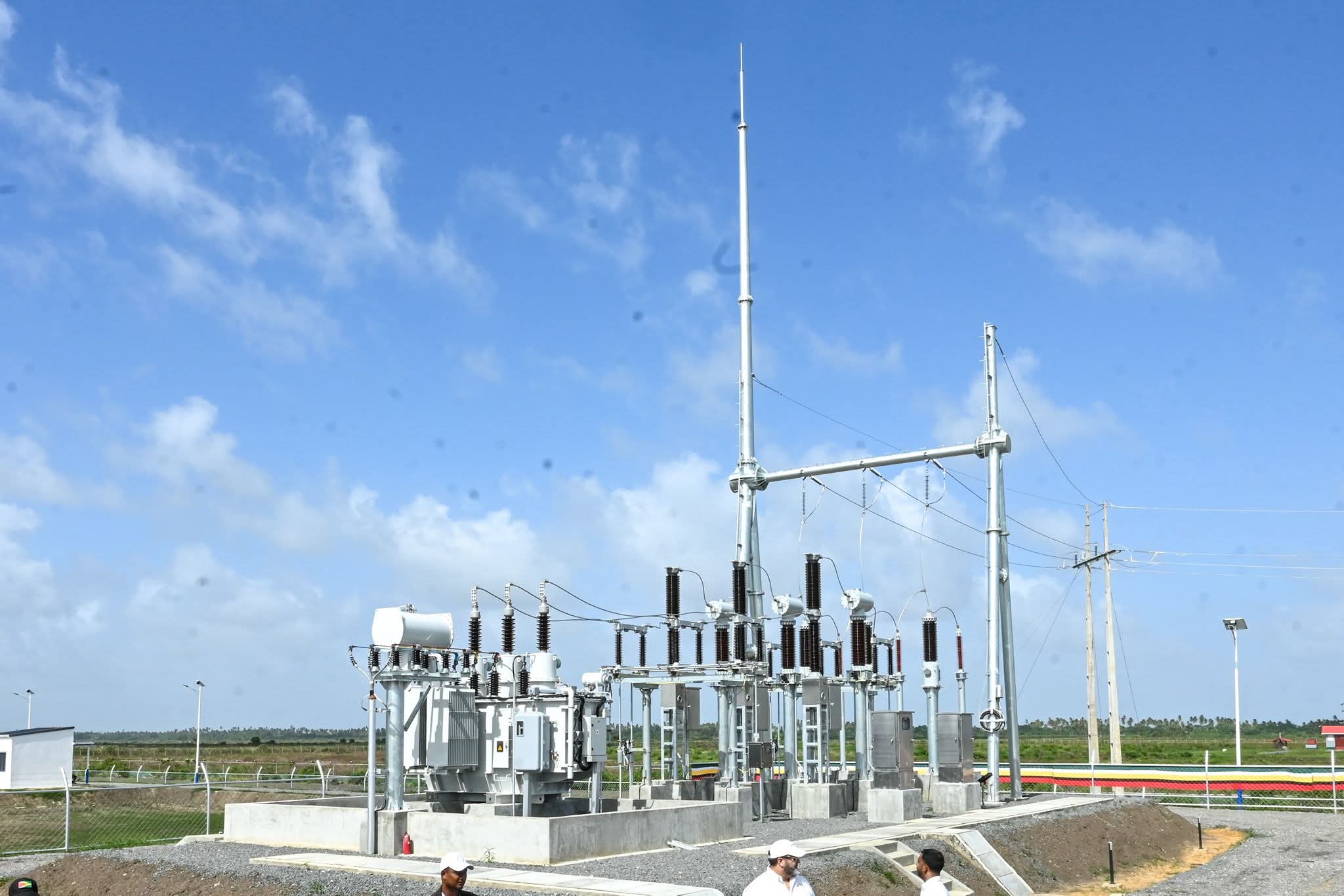
A 4-megawatt peak (MWp) solar farm was commissioned on Thursday in Trafalgar, Region Five, as part of efforts to expand renewable energy under the Low Carbon Development Strategy (LCDS) 2030. The project was inaugurated by Prime Minister Brigadier (Ret’d) Mark Phillips.
The solar farm, financed through the Guyana-Norway climate partnership under the REDD+ Investment Fund, is expected to generate approximately 6,000 megawatt hours of electricity annually. It will avoid the combustion of over 1.3 million litres of diesel and reduce 4,000 to 5,000 tonnes of CO₂ emissions each year. The project is expected to save the country over $300 million annually in fuel costs.
“These solar farms are a clear demonstration of our commitment to modernise Guyana’s energy sector. The Government of Guyana will continue to expand renewable energy sources for a sustainable future for all Guyanese,” Phillips said.
Earlier this month, a 3MWp Solar Photovoltaic Farm was commissioned at Prospect, East Berbice Corentyne, while in November a 3MWp solar farm was commissioned at Hampshire, also in Region Six. A similar project will be commissioned early in the new year at Charity. Additionally, a 15MW solar power project will be built in Linden by the end of 2026.
Phillips stated that the short- to medium-term plan is to build out 100 megawatts of solar power, complementing other medium and long-term projects including the Gas to Energy initiative and the Amaila Falls project.
Overall, the government intends to deliver over 500 megawatts of new generation capacity, with renewable energy forming a central pillar of this transition. Electricity consumption has more than tripled since 1980, and the country is determined to meet this demand sustainably.

A section of the gathering at the commissioning
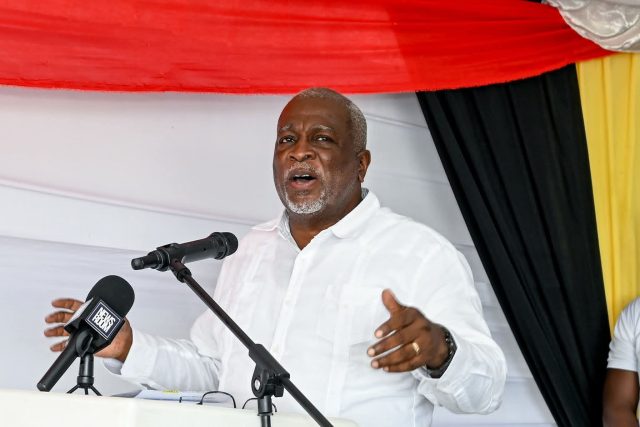 Prime Minister Phillips speaking at the commissioning