Plan rolls out to tackle region’s biggest health threats

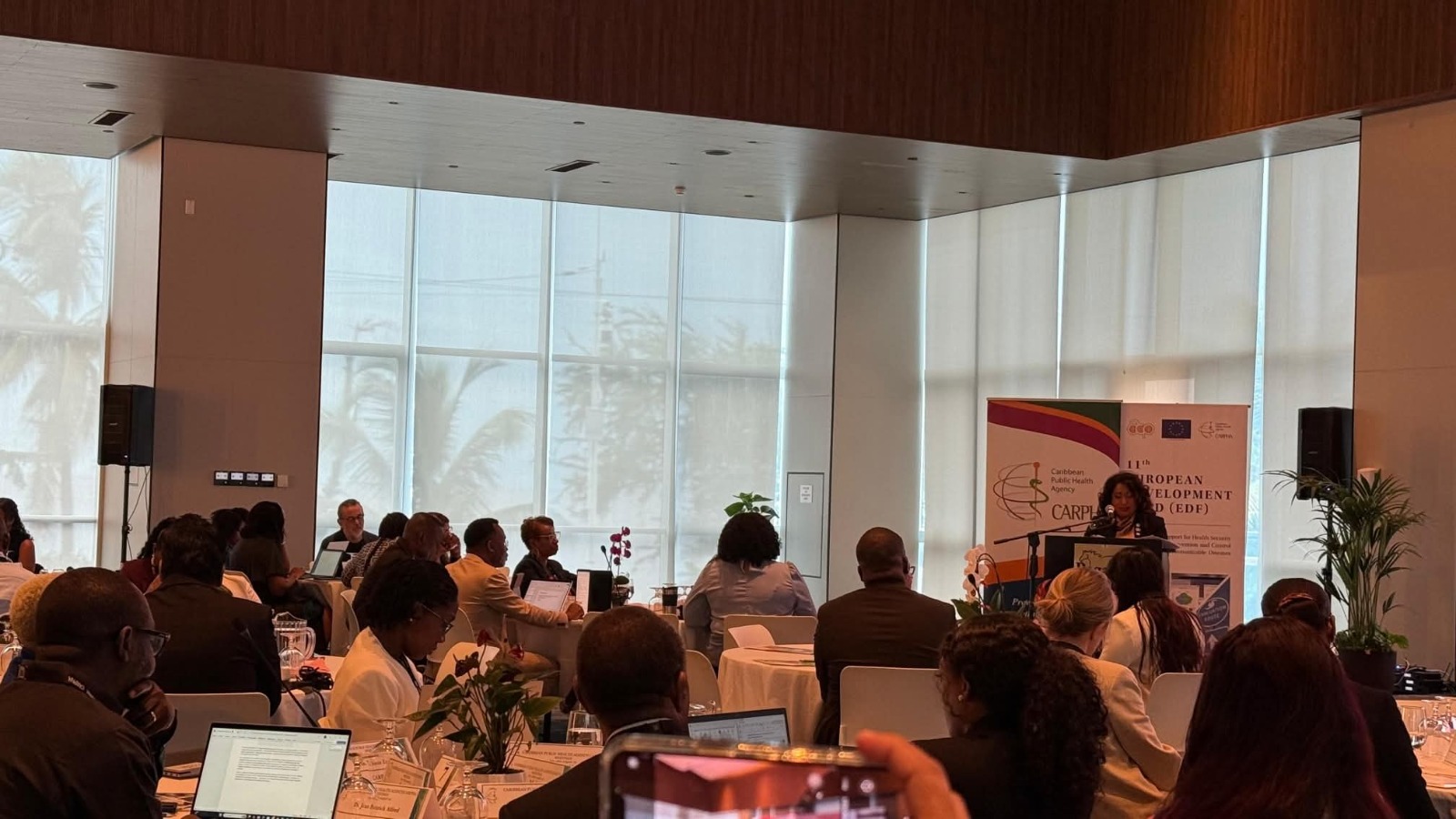
The Caribbean Public Health Agency (CARPHA) today launched a five-year strategic health plan aimed at tackling the region’s biggest health threats, including infectious and non-communicable diseases.

The plan was launched at the Pegasus Hotel in Georgetown, under the theme, “Stronger Together: Advancing Caribbean Health through Collaboration, Innovation, and Sustainable Action.”

In delivering the keynote address, Deputy Secretary-General of the Caribbean Community (CARICOM) Secretariat, Dr Armstrong Alexis, commended CARPHA on its results-based driven approach towards strategic implementation.

“The CARICOM Secretariat sees this strategic plan as an opportunity to strengthen structured collaboration and a roadmap to guide how member states align their priorities and collaborate on critical regional imperatives. This will require coordinated approaches to results mobilisation, clear implementation across the health landscape and joint reporting on progress on regional development outcomes,” he indicated.

Delivering remarks virtually, Chairman of CARPHA’s Executive Board, Minister Philip A. Telesford, said the plan builds on lessons learned from threats such as the COVID-19 pandemic and calls for stronger surveillance systems and smarter investments in health infrastructure.

“The unveiling of CARPHA 2025-2030 Strategic Plan is not just a technical milestone. It is a bold declaration of political will, leadership in action, and of our unwavering commitment,” he said.

Telesford added that the plan is about investing in systems and empowering institutions, as he stressed that such plans are only as good as their implementation.

In her remarks, Executive Director of CARPHA, Dr Lisa Indar, said the event marks not only the unveiling of a document, but the reaffirmation of a regional commitment to safeguard the health and well-being of every Caribbean citizen.

“This strategic plan was developed through a highly consultative and participatory process, with input solicited from member states, regional and international institutions which all helped to ensure it targets the current as well as the merging public health needs,” she noted.

Indar added that the new plan will also pave the way for improved collaboration and coordination with institutions and international development partners.

The event was sponsored by the 11th European Development Fund (EDF) Programme of Support for Health Security Strengthening for Prevention and Control of Outbreaks of Communicable Diseases in the Caribbean.
Regional health experts tackle emerging public health threats

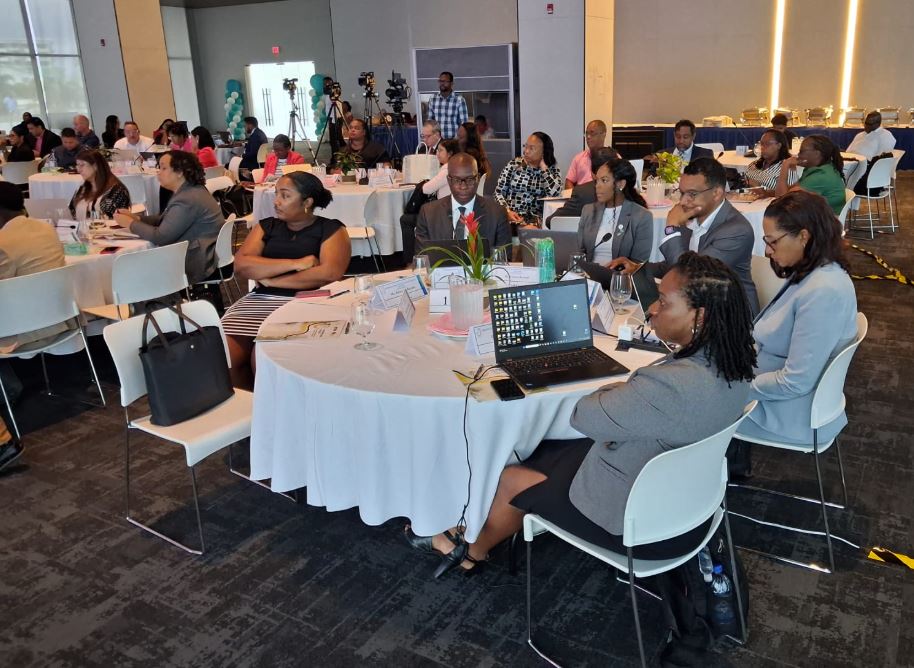
The spotlight is on regional health security as Guyana plays host to a high-level workshop aimed at strengthening the Caribbean’s response to emerging public health threats.

The Caribbean Public Health Agency (CARPHA) has brought together key regional and international partners for the Regional Health Security (RHS) and Regional Coordination Mechanism for Health Security Workshop at the Pegasus Hotel in Georgetown.

Against a backdrop of rising infectious disease trends and new global health challenges, the workshop seeks to update Caribbean member states on tailored strategies to improve public health resilience and coordination as they transition from the RHS pathway to a plan of action.

Speaking at the event today, CARPHA’s Executive Director, Dr. Lisa Indar, re-emphasised its commitment to the cause.

“Our individual and collective actions today will determine how well we are prepared for the challenges of tomorrow, and for when the next pandemic comes. Whether they come in the form of new infectious diseases, climate-related health threats, or the evolving needs of our people. This forum is not just a meeting of minds, but a call to action to strengthen surveillance, re-enforce our collaboration, and build resilient health systems,” she said.

Assistant Secretary-General of the Caribbean Community (CARICOM), Alison Drayton, in her remarks, said the Caribbean’s response to health threats is imperative.

“Our region’s shared experience with recent public health threats has underscored the urgent need to transform intention into implementation, strategy into structure, and vision into verifiable results. It is not merely a matter of public health. It is a matter of regional development, resilience and sustainability,” she stressed.

Health Minister Dr. Frank Anthony, in delivering the keynote address, pointed to the importance of meaningful collaboration between CARICOM member states and a unified approach to tackling health threats.

“The Caribbean region, through CARPHA has made remarkable strides in building a regionally unified health security architecture. Small states, porous borders, climate vulnerabilities mean we cannot afford to work in silos. Thanks to the leadership of CARPHA and the endorsements of CARICOM Heads of Government, we are building the mechanism to act swiftly and decisively,” he noted.

The event underscores the region’s commitment to building a stronger, more responsive health security system—one that can better anticipate, prepare for, and manage future public health threats. The workshop concludes tomorrow.

Mottley Urges Caribbean Unity

Calls for control of regional narrative 

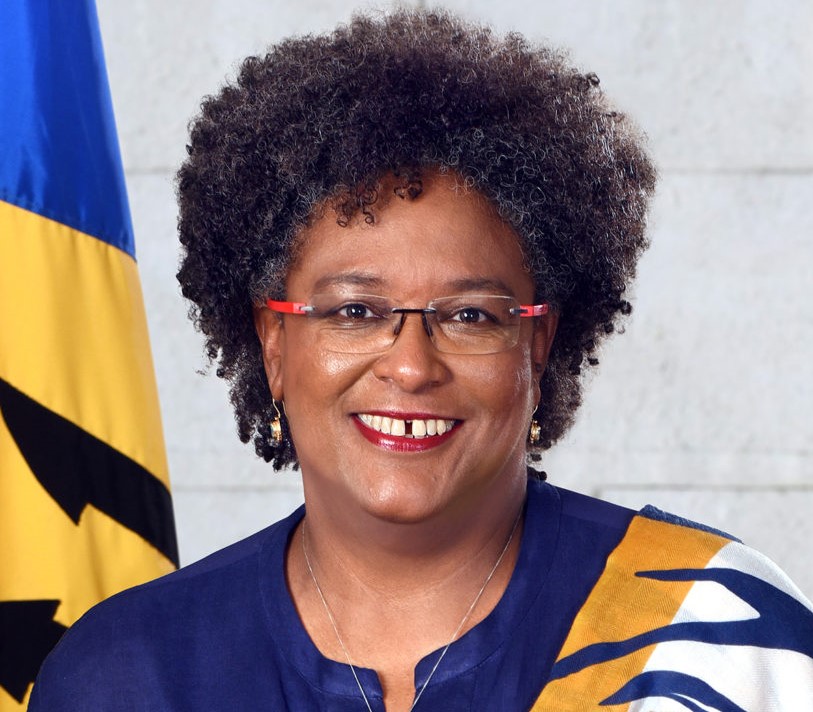
”Outgoing CARICOM Chair and Barbados Prime Minister Mia Mottley is calling on Caribbean nations to defend their sovereignty by ensuring control over their own voice and narrative in global affairs.

Delivering her final remarks as CARICOM chair, Mottley warned that in the absence of a fair international, rules-based order, the region risks becoming vulnerable to external influence and censorship.

The Prime Minister stressed the need for the Caribbean to invest in its own infrastructure—including communication satellites—to avoid reliance on foreign systems that could limit the region’s ability to speak freely on international matters.

While she named no country directly, Mottley’s comments come amid heightened global tensions and could be interpreted as a response to geopolitical divides—particularly regarding the conflicts involving Israel, Palestine, and Iran, where the United States continues to back Israel.

Referencing the teachings of Pan-African leader Marcus Garvey, Mottley underscored the urgency for Caribbean people to “emancipate themselves from mental slavery,” stressing that now, more than ever, the region must heed those words.

Her message serves as both a call to action and a warning as CARICOM looks ahead to a future shaped by digital control, geopolitical alliances, and the need for stronger regional unity.

Amelia’s Ward sawmill fire declared a Regional Level Disaster

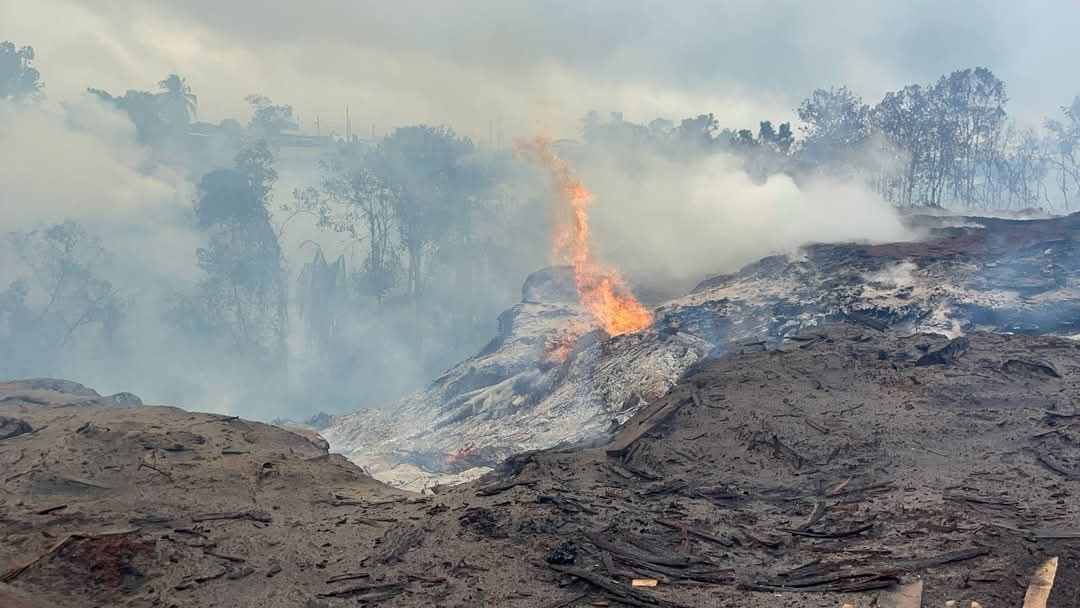
Prime Minister Brigadier (Ret’d) Mark Phillips has declared the ongoing industrial fire at the Waaldijk Sawmill in Amelia’s Ward, Linden, a Regional Level Disaster.

The fire, which started over a week ago due to combustible material, has sparked health and environmental safety concerns for residents in the area.

The Civil Defence Commission (CDC) continues to actively monitor the situation and has indicated that, despite its full support in the firefighting efforts by the Guyana Fire Service, the Guyana Defence Force (GDF), Region 10 Democratic Council, and other supporting agencies – including the operators in the area – the fire continues to emit thick smoke and dust, thereby affecting nearby communities.

The Prime Minister, Public Infrastructure Minister Juan Edghill, representatives from the CDC, and the Environmental Protection Agency (EPA) visited the affected area earlier in the week to gain a first-hand understanding of the situation.

Prime Minister Phillips, while speaking on a community radio station in Linden, noted that although the fire has been mostly contained, additional efforts are required to prevent further spread and reduce the level of smoke in the area. He formally declared a Regional Disaster due to the significant environmental, social, and economic impacts the fire has had on the region thus far.

In a statement issued on Thursday, the CDC noted that environmental assessments and resident interviews conducted by emergency response teams have revealed significant public health and environmental safety concerns, as well as property damage.

“The CDC is continuing to coordinate with all relevant agencies and stakeholders to manage the response,” the statement read.

“The Environmental Protection Agency (EPA) has confirmed that the average level of carbon dioxide (CO₂) concentration in residential areas is approximately 2.5 parts per million (ppm), well below the national standard threshold of 20 ppm. While these readings remain within the safe range according to national air quality standards, the persistent smoke and particulate matter may still pose risks to vulnerable individuals,” it continued.

The CDC urges residents in affected areas to report any new symptoms or concerns to the local emergency services and to limit outdoor exposure where possible.

The Commission further noted that affected residents who wish to be evacuated can be accommodated in temporary shelters managed by the agency.

“Please also be advised that the area is restricted to public access and should be avoided unless you are emergency response personnel,” the CDC advised.

It added that, in an effort to mitigate future incidents, an alternate dumpsite is currently being considered.

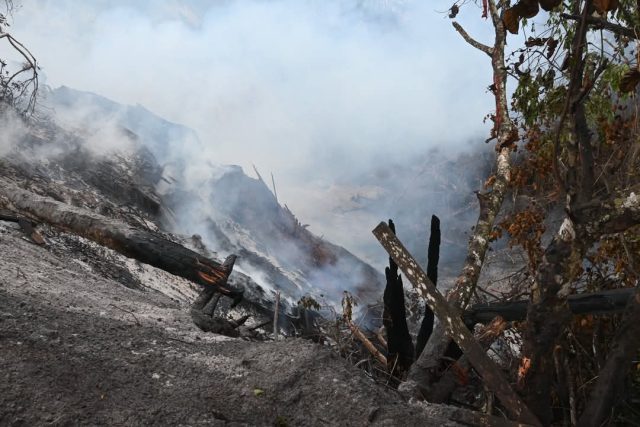
Smoke from the fire has affected air quality in surrounding areas 


CXC, CDB partner on Regional Parent-Teacher Association

The Caribbean Examinations Council (CXC) and the Caribbean Development Bank (CDB) have announced a collaborative effort to establish a Regional Parent-Teacher Association (RPTA), an entity designed to unify and strengthen parent-teacher engagement across the Caribbean.
A press statement from CXC today said that the RPTA will focus on several key objectives, including promoting cooperation among national Parent-Teacher Associations (PTAs), facilitating direct communication with ministries of education and other government authorities to build strategic alliances on matters of education, and advocating for improvements in the regional education system to positively impact the welfare of students, teachers, and parents.
Over 30 representatives of national and school-based parent-teacher associations and parent advocate groups across the Caribbean have unanimously agreed to support the initiative, the statement said.
It was highlighted that at a special stakeholder engagement session convened by CXC earlier this month, the parent representatives welcomed the opportunity to advance relationship-building with the regional examination and awarding body, and to learn more about the governing protocols and mechanisms to channel their ideas into the policymaking levels of CXC.
Dr. Wayne Wesley, the Registrar and CEO of CXC, said, “There are well-established structures for National Parent-Teacher Associations to share their ideas with their respective Ministries of Education, which relate directly to the policymaking mechanisms of CXC.”
Dr. Martin Baptiste, CDB’s Division Chief, Social Sector, told the PTA representatives and advocates that the bank is highly invested in the human capital development of the region. He added that the value of parental input in the regional development process is, without question, of vital importance, and a key factor in considerations at the CDB.
He said that the bank is ready to work with the parental associations of the region to bring about this Regional Parent-Teacher Association as a key step forward, and they are happy to be collaborating with CXC to make that happen.

Photo Credit: CDB


Guyana’s oil economy remains key driver of regional growth

Guyana’s lucrative oil economy will continue to be a major contributor to regional economic growth, even as the country’s expansion is projected to slow this year.
This was stated by Caribbean Development Bank (CDB) Director of Economics, Ian Durant, as he presented an overview of the Caribbean’s 2024 performance and the region’s 2025 trajectory at the CDB’s Annual News Conference on Wednesday.
“Guyana was again the standout performer, with the economy surging by 43.5 per cent, fuelled by increased oil production and continued expansion in its non-energy sectors. As a result, when we include Guyana’s performance, regional growth rises to 8.8 per cent in 2024, up from 6.6 per cent in 2023, highlighting the country’s significant influence on regional economic growth,” the director noted.
He pointed out that most Caribbean nations were experiencing moderate recovery from severe economic shocks, including the COVID-19 pandemic, which caused major supply chain disruptions, high inflation, and geopolitical tensions.
Haiti, in particular, remains in crisis, grappling with political instability, escalating gang violence, and high inflation, resulting in its sixth consecutive year of economic contraction.

For most other countries, growth was moderate, with commodity-exporting nations such as Trinidad and Tobago and Suriname continuing their gradual recovery from the COVID-19 pandemic. Meanwhile, service-exporting economies—many of which have surpassed pre-pandemic output levels—grew at a slower pace of 1.6 per cent in 2024, down from 2.8 per cent in 2023, as economic activity returned to more normal patterns.
Tourism remained a key driver of growth, with 6.8 million stay-over arrivals recorded in the first three quarters of 2023. More than half of the CDB’s member countries have now exceeded pre-pandemic levels, with some even setting new records.
Looking ahead, however, regional growth is expected to remain moderate in 2025, excluding Guyana. The CDB projects regional growth of 2.5 per cent, with performance varying across borrowing member countries.
Durant stated that Guyana’s economic expansion is expected to slow to 11.9 per cent following its rapid growth in 2024.
“Nevertheless, the country’s performance will remain a key contributor to the region’s economic growth. Hence, when including all 19 borrowing member countries, the region is forecast to grow by 4.6 per cent,” he noted.
Last year, Durant highlighted that higher oil production in Guyana was a significant driver of average regional growth in 2023. Production increased by 35.2 per cent, influencing growth in non-energy sectors and contributing to an overall expansion of Guyana’s economy by 32.9 per cent.

European companies engaged to secure suitable vessels for regional ferry

Two leading European ferry companies are currently being engaged as operators of the Connect Caribe regional ferry service work feverishly to get the project off the ground.

The highly anticipated ferry service was expected to be up and running by August of last year, but was forced to delay its startup after encountering problems relating to the cost of suitable vessels to ply the regional routes.

A recent release from Connect Caribe’s parent company, Pleion Group Inc, said the ferry company continues to address this issue, with its biggest challenge now being the identification of vessels compatible with Caribbean waters.

Jennifer Highland, Pleion’s Communications Director said that one significant external challenge that contributed to the project’s delay was the unsuitability of the initial recommended vessels for Caribbean waters. She noted that after a thorough evaluation by the agency’s Ferry Committee, compatibility issues were identified with the proposed vessels, particularly due to low tide conditions at a key port and smaller ports across the region.

As a result of these issues, the director said that key negotiations began last year for the provision of suitable vessels and operational partnership with two leading European ferry companies.

“We anticipate a positive outcome as we seek to ensure the smoothest start to the delivery of our service and the minimisation of risk to our operations.”

The director added that stakeholder engagement across the territories took longer than expected and this too added to the delay. She noted, however, that positive feedback from key entities were received and the company remained actively engaged with stakeholders.

Highland in the release noted that while the engagement process has required additional time, achieving a successful rollout has required careful planning and strategic coordination.

“However, we are confident that the outcomes will set a new standard for regional connectivity and trade efficiency. It will undoubtedly be worth the wait as we push towards the start of operations,” Highland posited.

The proposed routes for the passenger-cargo route within the Eastern Caribbean will involve Barbados, Trinidad, St. Vincent, St. Lucia, Dominica, Grenada. The USVI and surrounding areas are St. Thomas, St. John, St. Croix, St. Maarten, BVI, Anguilla, Antigua, Dominica while the cargo route in South America and Caribbean are Barbados, Trinidad, Guyana, Suriname.