Rice farmers struggle with high private land fees despite government reductions

Rice farmers continue to face unsustainable land lease costs on the private market, despite government efforts to reduce official land rental and drainage and irrigation (D&I) charges.

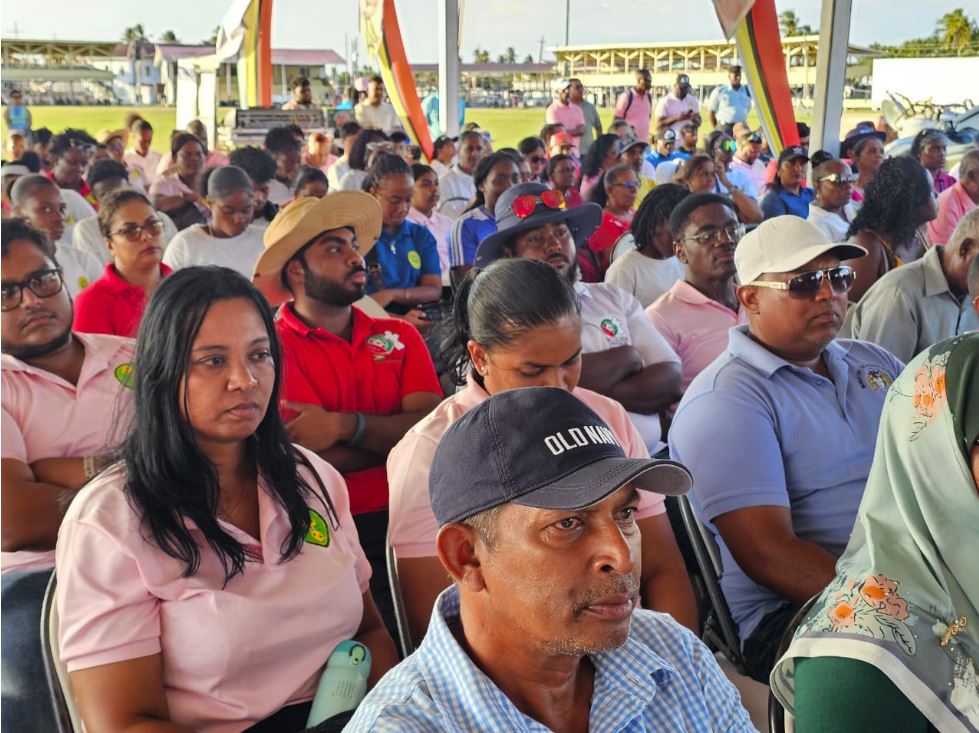
Speaking at a recent public forum in Burma, Mahaicony, Agriculture Minister Zulfikar Mustapha said the government reduced land rental and D&I charges from $15,000 per acre to $3,500 per acre in October 2020, shortly after taking office.

“The reality is different on the ground. People who own the land or have leases are charging $35,000 to $46,000 per acre. And sometimes, farmers themselves contribute to this problem by racing one another to get the land,” he observed.

He added that the situation is worsened by subletting, which is prohibited under current lease agreements but continues to occur. The government is taking legal steps to enforce these clauses through the Rice Assessment Committee, established under existing legislation.

Highlighting the financial pressure on farmers, Minister Mustapha noted that in areas such as Black Bush Polder, a 15-acre plot could cost as much as $700,000 in rental fees alone, significantly reducing profits even before production costs are considered.

“The land rental from the MMA is $3,500 per acre, yet farmers are paying landlords up to $45,000 per acre,” he explained.

The remarks come as the government promotes agricultural innovation aimed at improving crop yields and supporting farmers.
Rice farmers urged to embrace agro-business diversification

President Dr Mohamed Irfaan Ali on Wednesday unveiled ambitious plans to transform Guyana’s rice industry, focusing on agro-business diversification and expanding storage capacity as key measures for long-term sustainability.

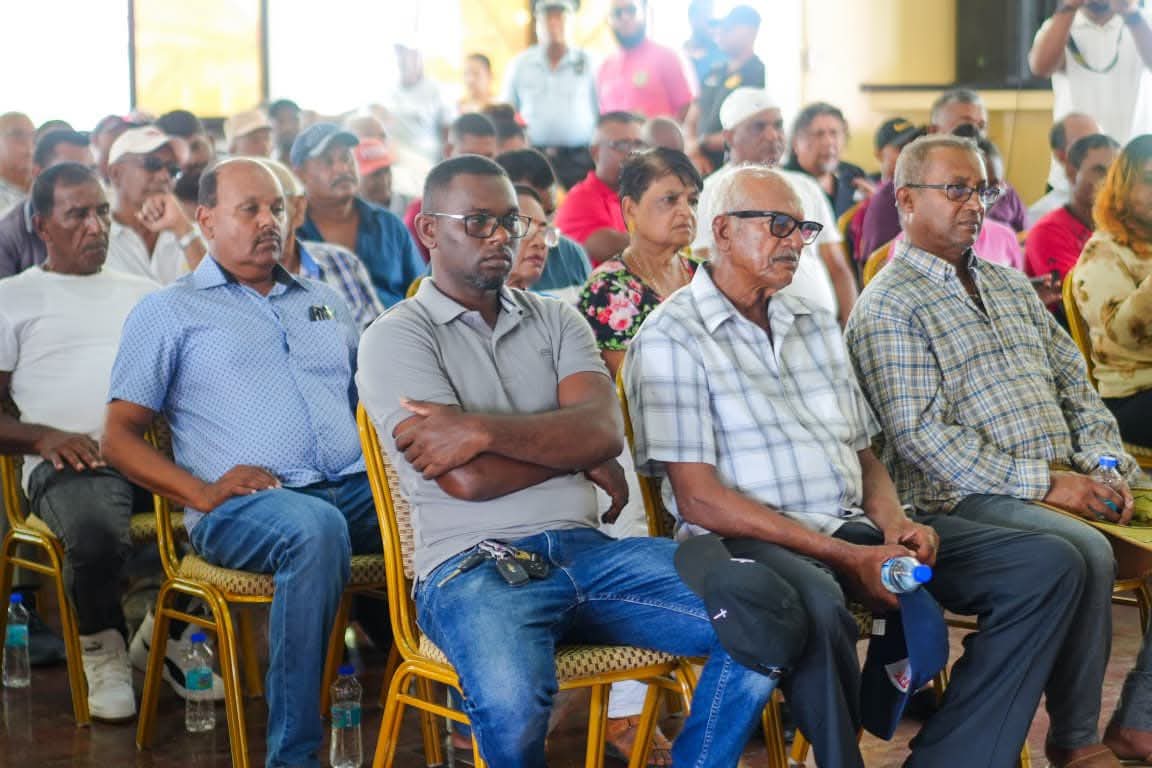
Speaking to rice farmers at the Skeldon Estate in Region Six, President Ali said the government intends to introduce high-value alternatives alongside traditional rice cultivation.

“I’m going to bring in experts from around the world to see how, in every 10 acres, we can convert one acre into an alternative crop,” the president said.

He added: “Whether we do cage farming for crab, which has a high value and big market, we can put a processing plant to handle the crab meat. For every 10 acres of rice farm, we aim to have one acre of high-yielding production. We are going to invest to help you do this. That is what is called agro-business diversification.”

The president also stressed that building storage facilities has become a national priority amid global rice market volatility.

“In all of the rice-producing regions, we now have to build storage capacity. The government will also stockpile. We must have the national capacity to stockpile maybe five million tonnes of rice because we want rice to succeed. We want you to continue planting, and we want to continue investing in better varieties to increase yields, so the appropriate infrastructure must be in place to support these investments,” he said.

Ali acknowledged the pressures facing the rice sector, citing falling global prices, oversupply, dumping, bumper crops worldwide, and delayed export payments.

“It is a very complex environment we are operating in, and as government, we are trying to navigate through that programme,” he added.

He reaffirmed his administration’s commitment to rice producers.

“Let me be clear. There is only one honest representative of rice farmers in the history of this country, and that is the People’s Progressive Party. The rest will try to use you politically. Do not allow yourselves to be used. We are going to work with you because we genuinely want you to succeed,” Ali said.

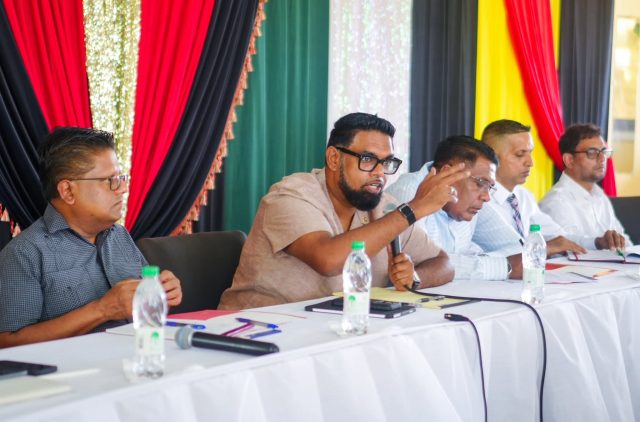
President Ali addressing concerns of the farmers

Ministers meet rice millers as falling global prices weigh on sector

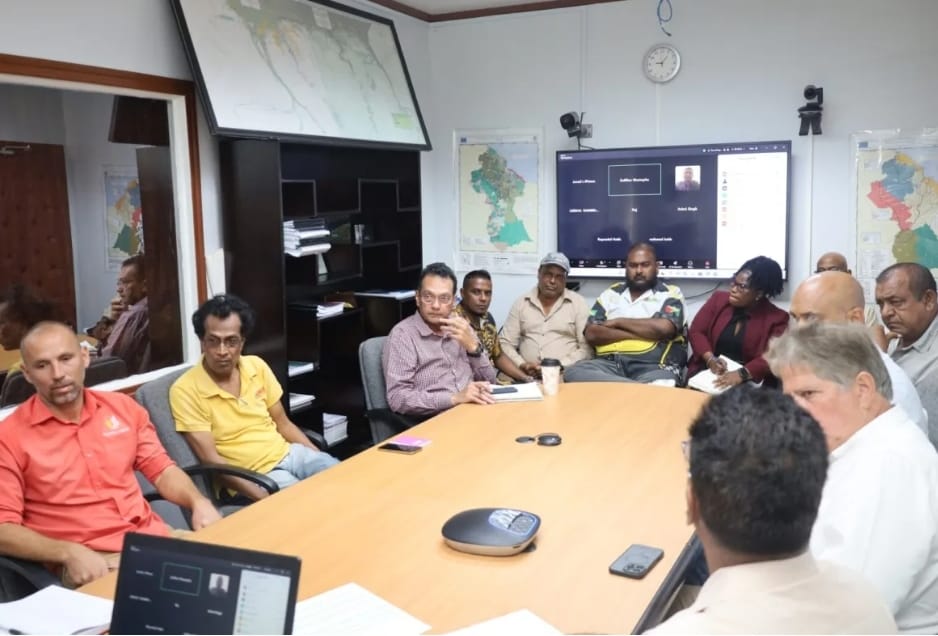
Rice millers on Tuesday met with top government officials to discuss concerns over the current crop, as falling global prices put pressure on the industry’s competitiveness.

At the meeting were Agriculture Minister Zulfikar Mustapha, Minister within the Ministry of Agriculture Vikash Ramkissoon, and Senior Minister in the Office of the President with responsibility for Finance, Dr Ashni Singh.

Mustapha said the government had made significant investments in the rice industry over the last five years, which he credited with boosting yields nationwide. He told millers there had been no major shifts in domestic market prices compared with the previous crop.

Millers welcomed the government’s support but warned that weaker world market prices are eroding their competitiveness against larger rice producers.

Mustapha said consultations with farmers and millers will continue, stressing the government’s interest in ensuring farmers receive a favourable price for their paddy from millers.

Dr Singh, who joined virtually, said the rice industry will be around for decades to come, and urged against short-term approaches despite marketing challenges. He said the government and millers share an interest in keeping farmers in business.

He also announced plans to meet farmers nationwide in the coming days.

Earlier this year, the government allocated about G$2 billion for fertiliser subsidies. For the first crop of 2025, it invested just over G$1.9 billion to guarantee farmers no less than G$4,000 per bag of paddy.

The rice sector is considered a key pillar of Guyana’s agricultural economy. (DPI)