Arbitrators in Exxon, Hess dispute over Chevron deal have reached a decision, sources say

The arbitrators in a legal dispute between Exxon Mobil (XOM.N), opens new tab and Hess (HES.N), opens new tab have reached a decision related to a major oilfield project in Guyana, according to two sources familiar with the matter.
The ruling will determine whether Chevron (CVX.N), opens new tab can move forward with its $53 billion planned acquisition of Hess.
It is unclear what the arbitrators decided or when the decision will be released.
“We remain confident in our position and appreciate the arbitration panel giving this issue the due consideration it deserves,” an Exxon spokesperson said in a statement.
Hess, Chevron and the ICC did not immediately respond to requests for comment.
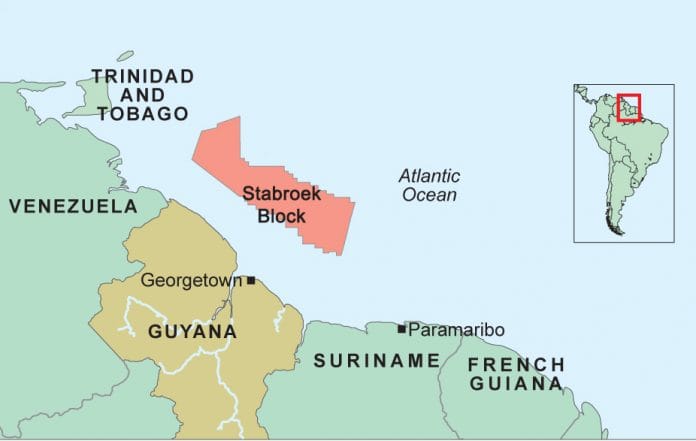
Chevron struck its deal to acquire smaller U.S. oil producer Hess in October 2023, with the prize being the latter’s 30% stake in the prolific Stabroek block in Guyana that is operated by Exxon with a 45% interest.
The closing of the acquisition has been delayed due to arbitration claims from Exxon and CNOOC (600938.SS), opens new tab, the other minority partner in the joint venture, who argue that they have a contractual right of first refusal to purchase Hess’ stake in the Stabroek block. CNOOC did not immediately respond to request for comment.
Chevron and Hess argue the clause does not apply to the sale of the whole company. If they lose the arbitration or are unable to agree on an acceptable resolution with Exxon and CNOOC, the acquisition would fail, according to the terms of the deal.
The stakes are high for Chevron. Acquiring Hess is key to Chevron CEO Mike Wirth’s strategy to improve the company’s performance. Gaining access to the Stabroek block would provide a valuable addition to Chevron’s declining oil and gas reserves. (Reuters)

Guyana confirms Exxon relinquished 20 per cent of Stabroek Block

The Government of Guyana on Wednesday confirmed that ExxonMobil Guyana Limited (EMGL) has completed the relinquishment of 20 per cent of the Stabroek Block, returning 2,534 square kilometers to the state in accordance with national legislation.

The Ministry of Natural Resources (MNR), in collaboration with the Guyana Geology and Mines Commission (GGMC), said the review of Exxon’s relinquishment proposal under the renewal of the Stabroek Block Petroleum Exploration License has been finalised.

The relinquished acreage does not include areas associated with production, appraisal, or discoveries, the ministry said in a statement.

“The legal aspect of the renewal is also complete, which involved the final compliance checks and drafting of applicable regulatory instruments,” the statement added.

Since 2015, the Stabroek Block has yielded multiple oil discoveries, which are currently undergoing assessment to determine commercial viability. Under the Petroleum Activities Act (PAA), non-commercial discoveries must be relinquished, while potentially commercial areas can be retained by the operator.

Exxon has submitted updated technical data and discovery outlines to the MNR and GGMC as part of the relinquishment process.

Authorities said they will continue to ensure that all petroleum activities comply with the PAA, the Stabroek Block agreement, and international best practices.

The Stabroek Block, operated by Exxon in partnership with Hess Corp and China’s CNOOC, spans approximately 26,800 square kilometers offshore Guyana.

225 lifts of crude oil from Stabroek Block recorded in 2024

Minister of Natural Resources, Vickram Bharrat, disclosed on Tuesday that 225 lifts of crude oil from the Stabroek Block were recorded in 2024, marking a substantial increase from the 142 lifts recorded in 2023. This information was reported via the government’s Department of Information (DPI). It was noted also that each lift of crude amounts to one million barrels of oil.

Minister Bharrat said that of the total lifts, 28 went to the government of Guyana – eleven from the Liza Unity Floating Production, Storage, Offloading (FPSO) vessel; seven came from the Liza Destiny FPSO, and ten from the Prosperity FPSO. Depending on the market price, this translates to millions of dollars that would be used to fund critical development projects locally.

“[This is] mainly because of the third project coming into production, and the full optimisation of the FPSOs in 2024 compared to when it started out in 2023,” Minister Bharrat pointed out. He said that in2025 the amount of lifts will skyrocket once the One Guyana FPSO becomes operational. In relation to the revenue earned from the lifts, it was explained that the government is verifying these details.

The minister clarified that “there is no fixed price for a lift; it depends on the market price.” It was highlighted that for the first time since the country began producing oil, Guyana is receiving a premium of over US$1 from the crude marketed from the Liza Destiny FPSO. “When we started out in 2020, we were paying Shell to market our crude…now we have two companies that are paying us a premium to off take our crude.”

The information department said that a “premium” refers to an additional amount of money paid above the standard market price for a particular type of oil or gas. This translates to higher revenue for the country and strengthens Guyana’s standing in the international oil market.

The natural resources minister added, “I don’t think there are many countries in the world, especially small producers that can actually attract a premium as Guyana.”