Minister Manickchand: Education reform aligns with Guyana’s changing economic landscape

In the rapidly transforming global and national economy, the education system in Guyana is undergoing a revolutionary shift—one marked by measurable student achievement, nationwide resource equity, and targeted investment in both infrastructure and human capital.

At the forefront of this transformation is Education Minister, Priya Manickchand, whose leadership has shepherded the sector from a pandemic-induced crisis to commendable resilience and renewal.

Speaking during a recent interview on SOURCES with Svetlana Marshall, Minister Manickchand revealed that Guyana’s students are performing better across the board, particularly in core subjects like Mathematics, English, Social Studies, and Science.

In 2020, just 39.43 per cent of students passed Mathematics. This year, that figure climbed to 55.51 per cent. Similarly, performance in English rose from 61.22 per cent to nearly 70 per cent. Social Studies and Science showed gains of 10 and 20 percentage points respectively.

This improved performance, Minister Manickchand attributed to a comprehensive and systemic approach. Every public school child now receives a full set of textbooks, once a privilege of private school students only.

They also benefit from instructional videos on the Learning Channel, trained teachers (especially in underserved areas), access to past papers, a reinvigorated school feeding programme, and a cash grant to support learning at home.

These efforts are paying off. The latest NGSA (National Grade Six Assessment) results show a more equitable spread of high-performing students across private and public schools. Of the 901 students placed in the nation’s top five secondary schools—Queen’s College, Bishop’s High, St Rose’s, St Stanislaus, and St Joseph’s—492 were from public schools.

“That’s almost 100 more than from private schools,” Manickchand emphasised. “It shows that access to equal resources really does level the playing field.”

Traditionally, placement at national schools has been equated with success. But the minister is keen to reframe that narrative.

“Children who didn’t get into the top schools are still scoring in the 90s and are being placed in high-performing regional schools,” she said.

From Wakenaam Island Secondary to Anna Regina and Diamond Secondary, students are excelling in CSEC and Caribbean-wide assessments. A student from New Amsterdam recently topped the Caribbean in Agricultural Science, while another from Wakenaam led the region in Business.

This decentralisation of academic excellence signals a maturing education system—one where the quality of learning no longer hinges on geography.

Teaching the Teachers

Key to sustaining performance gains is teacher training. COVID-19, though disruptive, presented an opportunity: the transition of the Cyril Potter College of Education (CPCE) to a hybrid online model.

Today, over 9,000 teachers are either trained or in training, including those in remote villages like Aishalton and Monkey Mountain. With 14 satellite centres and over 200 sites, teachers can now upskill without leaving their communities or families.

This has also improved teacher retention. Contrary to public perception, the ministry has seen no significant brain drain from migration.

“We’ve actually had teachers return from The Bahamas and other countries asking to be reconnected to the service,” Manickchand noted.

Still, challenges remain, chief among them being absenteeism. On any given day, about 30 per cent of teachers are absent. The ministry is now working on a systemic substitute teacher programme to maintain instructional continuity.

Beyond Bricks and Mortar

At the heart of access is infrastructure. Over the past five years, the ministry has launched or completed construction of 22 secondary schools in hinterland and underserved regions, significantly reducing reliance on “primary tops”—primary schools delivering secondary education due to lack of infrastructure.

Region Nine alone saw a reduction from 111 first-formers placed in primary tops in 2020 to just five in 2025. In Region Three, the figure dropped from 299 to zero.

This dramatic shift enables more students to access a full secondary education and underscores the Ministry’s commitment to education as a foundation for national development.

The education system is not only about immediate performance but also long-term adaptability. Programmes like the national Grade Five diagnostic exam, special needs integration, and curriculum modernisation—particularly with discussions on incorporating national issues like the Guyana-Venezuela border controversy—are part of a broader vision.

Furthermore, the expansion of TVET (Technical and Vocational Education and Training) and investment in school feeding, sanitation, and teacher monitoring underscore a holistic approach.

The education minister explained that as Guyana’s economy pivots towards oil, gas, and digital transformation, its education system is rising to meet the moment.

She highlighted that by building equity into access, accountability into delivery, and relevance into content, the government is crafting an education model that not only boosts student performance but prepares future citizens for a dynamic, diversified economy.

“We’re not there yet,” Manickchand admitted. “But we are seeing the results. And it’s only going to get better.”
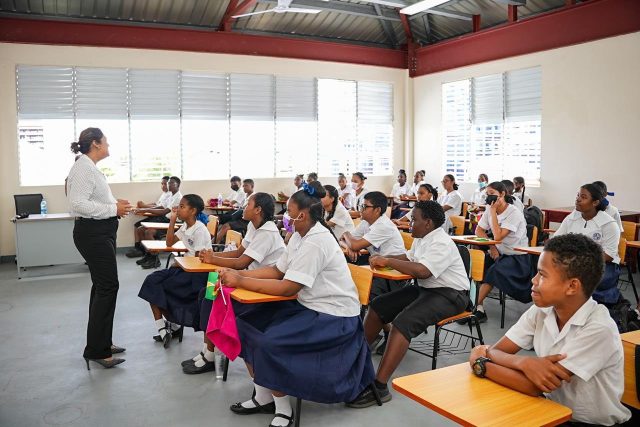
Minister Manickchand interacts with students
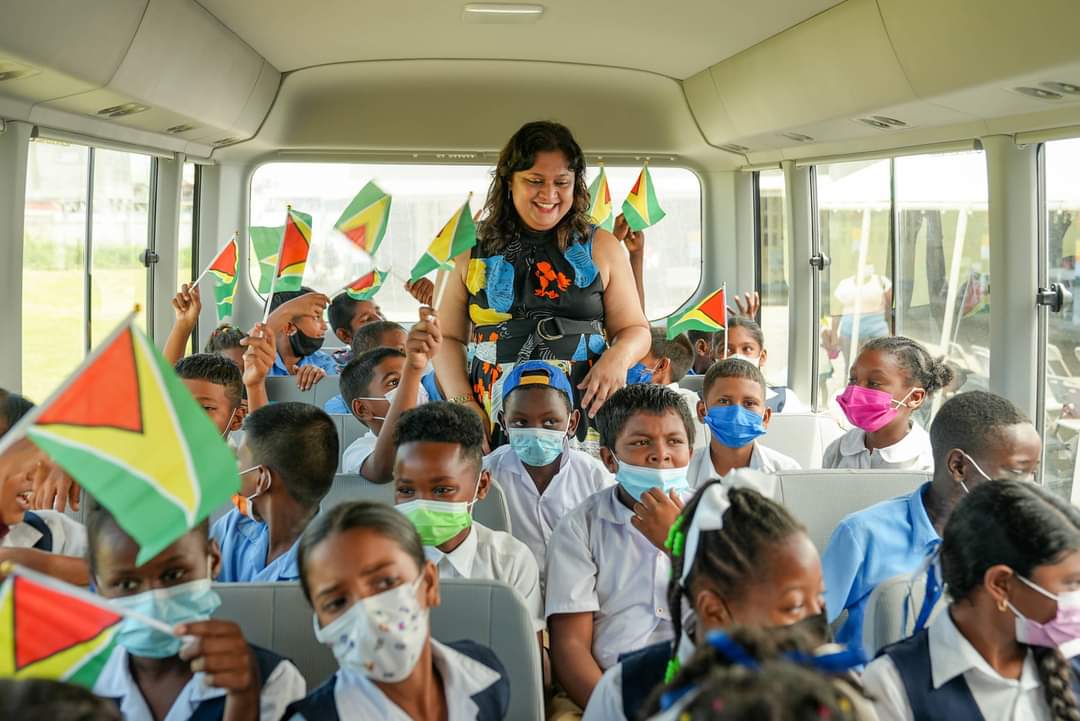


Students to receive transportation grant

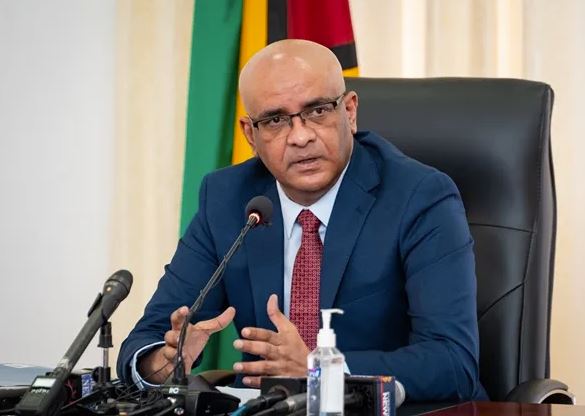
The government will roll out a transportation grant for students once re-elected for a second term, said People’s Progressive Party (PPP) General Secretary, Dr. Bharrat Jagdeo, on Thursday.

Speaking at his weekly press briefing at Freedom House, Dr. Jagdeo said the aim of the grant is to ease the burden of transportation costs on parents to send their children to school.

“The idea is, how do we take away the burden of funding education from the family? So, every child in the country, whether you are poor or your parents are poor or wealthy, they have opportunities for good quality education. The next thing is getting the child to school. We might not be able to cover all the costs, but we give maybe on an annual basis a grant to the parents to offset transportation costs,” Dr. Jagdeo said.

He added that the government will also increase the school uniform grant, expand the school feeding programme, and continue free education from nursery to university.

“We can remove all of the burden. When a person has a child now they don’t have to worry whether they’re rich or poor that their child would get a deficient education, because the government will fund it all. Some of them may say, ‘I’m not taking it.’ At least it’s there for those who need it,” he re-emphasised.

Dr. Jagdeo said this will be a major investment and a commitment to the people of the country.

“It will yield, years from now, massive benefits. The industries that we can generate, if we have high quality labour and education, which we’re committed to delivering,” he said.

The issue of transportation for school children has always been a concern for parents, but the government has never been keen on government-run buses, although it supports this system.

“Where that could be done we will continue doing it for communities that can run them and then we will also do this grant,” he noted.

Dr Jagdeo salutes parents, teachers for their sacrifices   

People’s Progressive Party (PPP) General Secretary, Dr. Bharrat Jagdeo, on Thursday extended congratulations to National Grade Six Assessment (NGSA) pupils who received their results, giving special recognition to those who attained perfect scores in the various subject areas.

He also applauded the broader group of high achievers and saluted educators and parents whose efforts, he said, have been instrumental in this year’s improved performance.

Speaking at his weekly press conference at Freedom House, Dr. Jagdeo described the 2025 NGSA results as a reflection of the government’s sustained investment in education.

“The number of children who performed exceedingly well this year is very encouraging. It’s a clear indication that the hard work of our students, teachers, and education professionals is paying off,” he said.

The former president reflected on the state of education when the PPP took office in 1992, noting that only 35 per cent of children who sat the Common Entrance exam were placed in secondary schools. The majority were relegated to community high schools or kept in primary-level classrooms.

“At just 10 or 11 years old, many of these children were effectively judged as failures and denied a pathway to write CSEC (Caribbean Secondary Education Certificate) or access further opportunities,” Dr. Jagdeo stated.

He declared that those days are over, citing key policy shifts that have changed the educational landscape.

“Through the construction of more secondary schools, removal of corporate tax on private education, and improved access, every child who wrote the NGSA this year will have the opportunity to write the CSEC examination,” he said. “That is not just a statistic. That is transformation.”

Dr. Jagdeo announced that the government is on track to achieve universal secondary education and revealed that the state will continue covering the cost of up to eight CSEC subjects for each student in both public and private schools.

He also stressed that the NGSA should not be seen as a final judgment of a child’s potential.

“For many years, it was the lack of space—not a child’s ability—that dictated outcomes. That era is behind us. Every child deserves a fair chance to succeed,” Jagdeo said.

The national education budget grew from $53 billion in 2020 to $185 billion in 2025, and the recruitment of over 3,000 additional teachers has brought the national total to nearly 15,000.

This expansion has lowered the student-teacher ratio from 13:1 to 12:1—among the lowest globally—enabling more personalised attention for students.

The government also plans to introduce digital schools in its next term.

This initiative, he explained, will incorporate artificial intelligence and online learning platforms to develop tailored educational programmes for each student.

“This will allow us to deliver truly personalised education that caters to individual strengths and addresses weaknesses,” he said.

Acid attack on students, teachers ‘act of evil’, says Manickchand

Education Minister Priya Manickchand has strongly condemned Monday’s acid attack that left three students and two teachers from Chateau Margot Primary School injured, calling it an act of “evil” that must be denounced by all Guyanese.

In a deeply emotional statement shared on her official Facebook page, Minister Manickchand said, “Yesterday, I went to the hospital with three children and two teachers who were attacked with what the doctor says is acid. How can this be excusable or justified or countenanced in any way? We were ready to stand together against any evil when we all thought evil was done to Adrianna. Let us stand against the evil of children and women being burnt by acid.”

She called on the public to unite against all forms of violence, particularly those that affect the nation’s children and educators.

Her statement comes amid heightened national tensions following the tragic death of 11-year-old Adrianna Younge.

“Nothing that happened last night advanced the love and healing this family needs,” Manickchand said, referencing the looting, bigotry, and violence that followed the announcement of Adrianna’s death. “That was not in the name of Adrianna.”

In a separate official release, the Ministry of Education expressed its “deep concern” over the acid attack and emphasised that schools must remain safe havens for learning. “Any act that threatens this sanctity will not be tolerated,” the Ministry stated.

According to the Ministry, Minister Manickchand personally accompanied the injured pupils and teachers to a hospital in Georgetown, where she remained with them as they received medical attention. The Ministry reaffirmed its commitment to safety and said it is working closely with law enforcement to ensure a full investigation is conducted.

Eyewitness accounts and videos shared online allege that two men on motorcycles threw the corrosive substance at the group on Monday afternoon.

A representative of the Guyana Police Force’s Corporate Communications Unit confirmed that the incident is under investigation, but no arrests have yet been reported.

The Ministry reaffirmed that violence of any kind against students, educators, or the public will be met with swift and appropriate action.

Minister Manickchand has urged citizens to channel their emotions into unity and action that protects the nation’s most vulnerable.

“Our people, our children deserve nothing less,” she said.

CSEC students desirous of attending UG, encouraged to apply early

Caribbean Secondary Education Certificate (CSEC) students writing examinations this year are encouraged to apply for admission to the University of Guyana for the upcoming academic year, pending their results.

According to a release, students who wish to apply must indicate to the Caribbean Examinations Council (CXC) that they wish to have their results shared directly with the University by the Council, in order to save time.
Some programmes will allow provisional acceptance, pending receipt of grades, the release noted.

Prospective applicants are advised to apply early to avoid disappointment, as quotas may be filled quickly. The University is currently receiving upwards of 1,200 applications per week.
The application process for Degree, Diploma, and Certificate programmes for the upcoming 2025–2026 academic year opened earlier this month and will close on 16 May 2025.
Tuition is free from 1 January 2025 for all new and continuing students enrolled in Diploma, Bachelor’s, Master’s, and PhD programmes offered by the University of Guyana.

For more information on the application process, admission requirements, and other details, interested individuals can visit the University’s website: https://uog.edu.gy/.

Improved transportation for Citrus Grove students

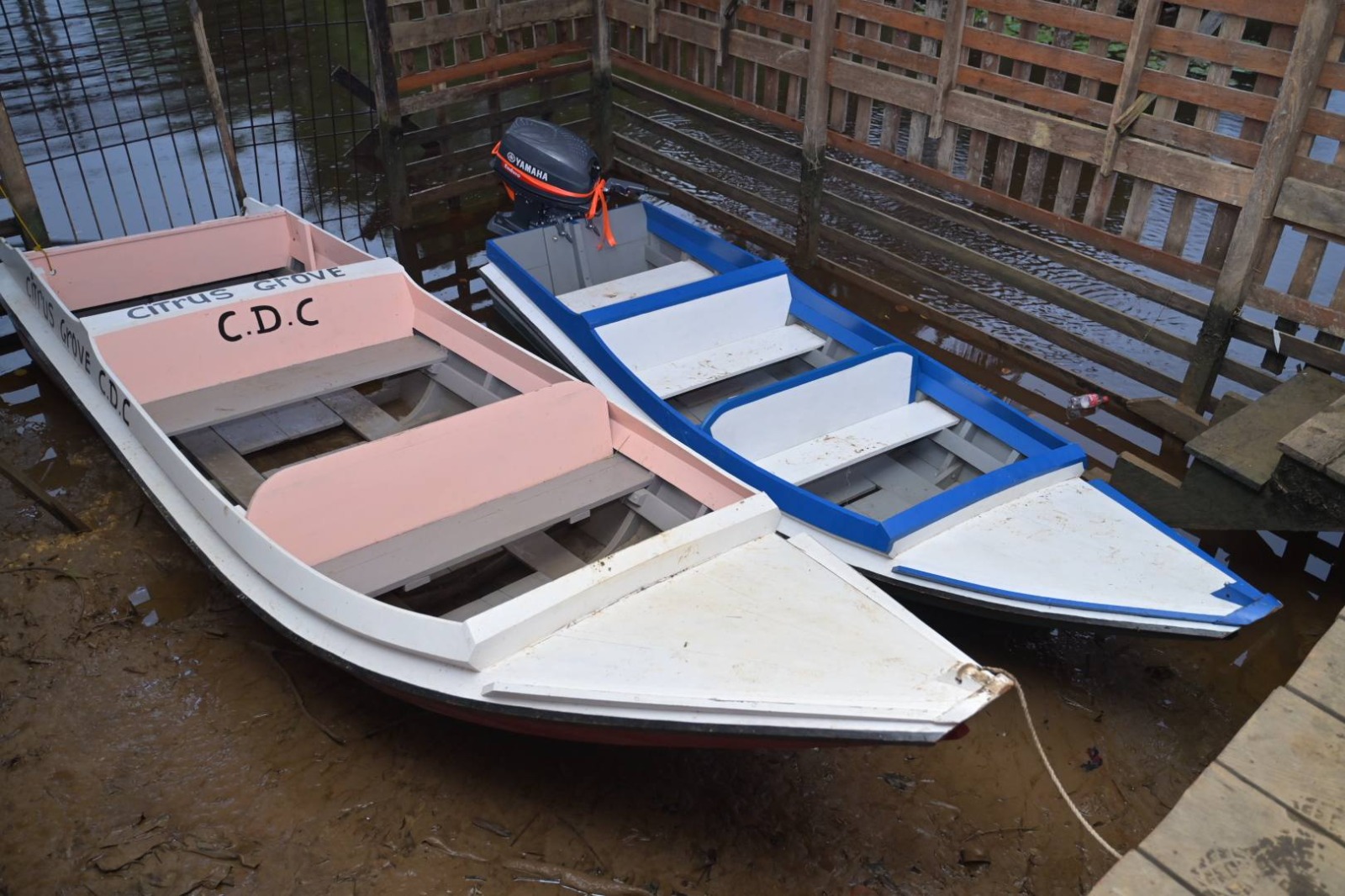
The community of Citrus Grove in Region One will benefit from revenue generation and improved transportation, primarily for school children, through the procurement of a boat and engine.
Housing and Water Minister, and Parliamentary Representative for Region One, Collin Croal, presented the mode of transport to the Community Development Council (CDC) last evening.
The boat, valued at $500,000, was procured under the 2024 Low Carbon Development Strategy (LCDS) fund. Meanwhile, the engine was provided through the 2023 Presidential Grant at a cost of $950,000.
The new boat is expected to enhance the Council’s capacity in fulfilling its mandate through revenue generation. It will also assist with the transportation of school children, ensuring they have better access to education.
In addition to the handover of the new vessel, repairs were carried out on another boat currently being used to support local farmers.

Students champion clean water and conservation

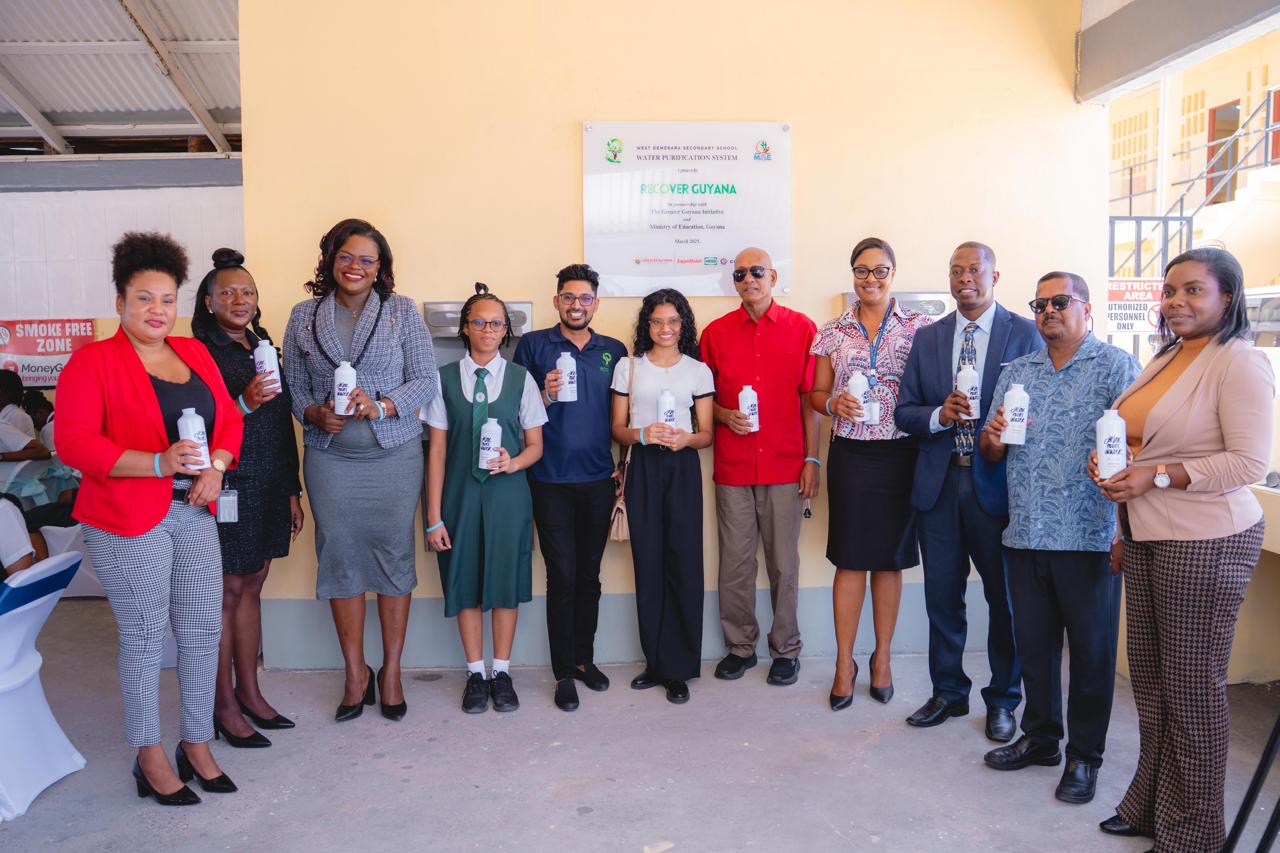
Students of the West Demerara Secondary School are advancing water purification methods through a sustainability initiative, as Recover Guyana, in partnership with The Greater Guyana Initiative (GGI) and the Ministry of Education, launched the Water Purification and Sustainability Initiative on Monday.
The Clean Water for All: Water Purification Initiative will provide access to clean and refreshing drinking water through the installation of an advanced water filtration system.
The system transforms ordinary tap water into a clean, refreshing source of hydration using reverse osmosis and is uniquely designed to track saved plastic bottles, fostering a culture of responsible water use and conservation.
This innovative system will reduce reliance on single-use plastic bottles and promote environmental sustainability.
It will also create a model for sustainability, improved health, and environmental responsibility that can be adopted in schools across Guyana.
The Water Purification and Sustainability Initiative was proposed in 2023 by Queen’s College (QC) student Vasana Persaud, winner of the 2023 SHOUT Competition.
This initiative was first implemented through Recover Guyana, resulting in the reduction of more than 30,000 single-use plastic bottles to date.
The Water Purification and Sustainability Initiative at the West Demerara Secondary School was developed from recognising the importance of sustainable water systems in the education sector and building on the success of the Queen’s College initiative.
Speaking at the launch, President of Recover Guyana, Dr Dave Lalltoo, explained that this transformative endeavour is not only about providing clean water but about teaching future generations how to live sustainably and take care of the planet.
GGI Lead, Alicia Bess-Anderson, emphasised the importance of collaboration in creating an environmentally sustainable future.
She noted that the collaboration between GGI, Recover Guyana, and the Ministry of Education provides a unique opportunity for GGI to expand its reach to a new category of stakeholders – secondary students.
“The need for this project was evident. We recognised that single-use plastic bottles contribute to environmental pollution, and water purification is an ideal solution,” she noted.
She further explained that the project will not only cater to the needs of the West Demerara Secondary School but will also benefit the community, representing a fundamental shift in how we approach environmental responsibility and community health.
As part of its commitment to sustainability, the transformative project encourages students, educators, and the wider community to reduce waste and embrace more eco-friendly habits, paving the way for a greener and healthier future for all.

The water purification system in action

The water purification system in action