Guyana hit with 15 per cent US tariff as White House unveils sweeping new trade measures

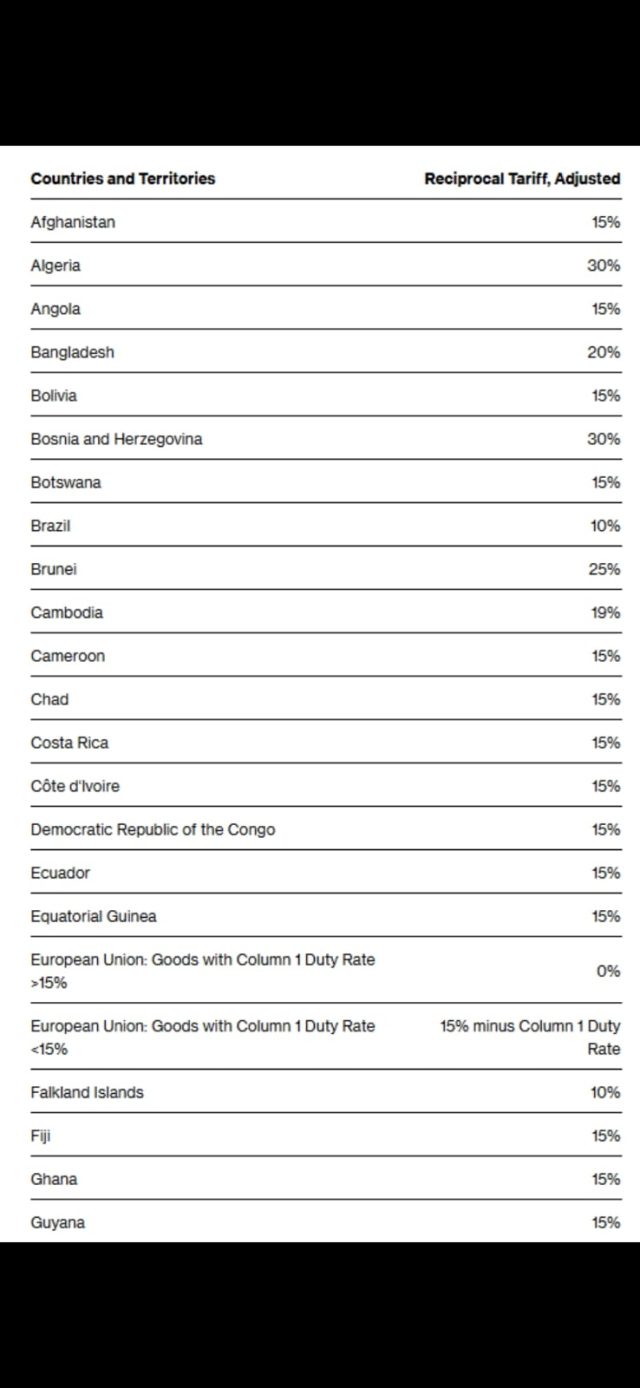
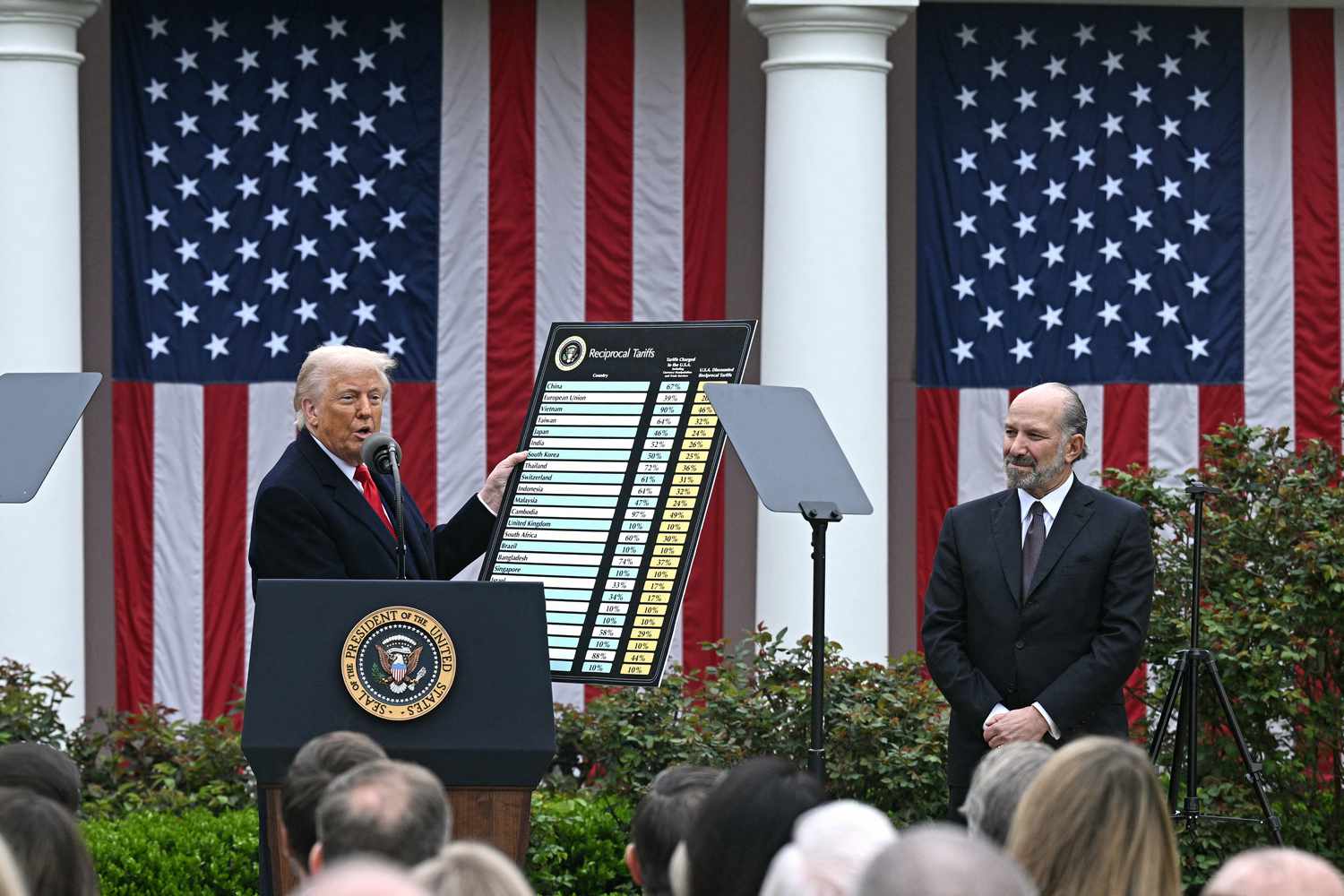
The United States has imposed a 15 per cent reciprocal tariff on imports from Guyana, as part of a sweeping package of trade measures unveiled by the White House just hours ahead of a 1 August deadline for countries to reach new trade agreements with Washington.

The measures—part of what President Donald Trump once dubbed “Liberation Day” tariffs—will take effect in seven days and target dozens of countries that failed to strike deals with the US in time.

While Trump has announced eight bilateral agreements so far, including with the European Union, Japan and the United Kingdom, the full details of those pacts remain unclear.

Few nations have been spared. Canadian imports will face tariffs as high as 35 per cent, among the highest announced. Thailand, which had been slated for a 36 per cent tariff, will now face a reduced 19 per cent duty, aligning it with regional peers such as Indonesia and the Philippines.

Mexico has been granted an additional 90 days to conclude a trade agreement, while Taiwan faces a 20 per cent tariff. It remains unclear whether its semiconductor sector will be subject to additional sector-specific levies.

Tariff rates go as high as 50 per cent on some goods, signaling a major escalation in the administration’s global trade strategy. (This story includes excerpts from the BBC News)


Guyana pushes for US tariff talks

The Government of Guyana has reiterated its interest in meeting with US administration to discuss the recently imposed 38 per cent trade tariff on Guyanese exports.
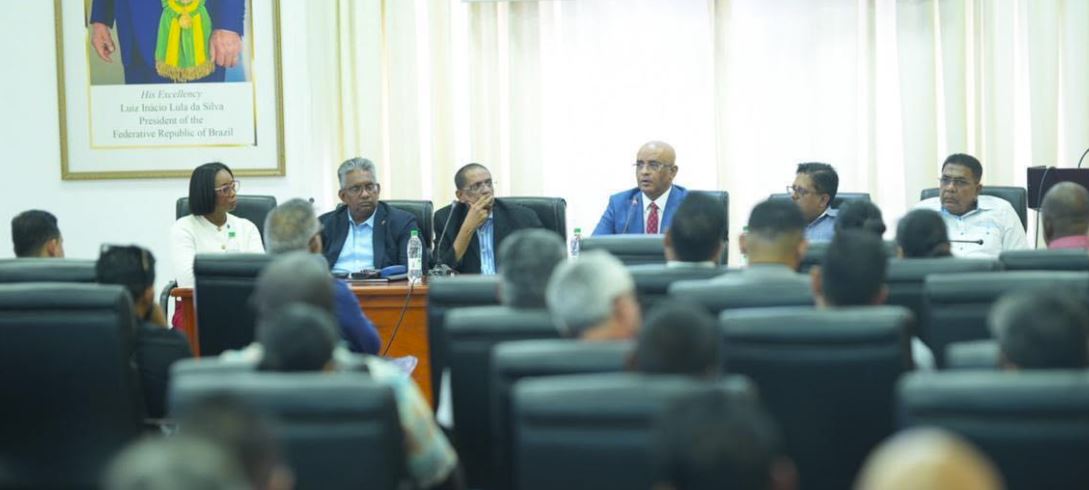
Vice President Bharrat Jagdeo, along with Senior Minister in the Office of the President with Responsibility for Finance and Public Service, Dr. Ashni Singh and Agriculture Minister Zulfikar Mustapha, met earlier this week with key members of the Private Sector Commission (PSC), the Georgetown Chamber of Commerce and Industry (GCCI), and the Guyana Manufacturing and Services Association (GMSA).
During the meeting, the government reaffirmed its commitment to working closely with the local private sector to ensure continued competitiveness in the US market.

The Trump administration has placed a 90-day halt on previously issued trade tariffs and implemented a 10 per cent tariff on countries across the board—except for China.
Nonetheless, the government has expressed appreciation for President Trump’s willingness to engage directly with countries on the issue.
“The Guyanese Government is actively pursuing this option, given the strong relationship between Guyana and the United States,” the Vice President stated.
Several proposals were discussed regarding the trade tariffs, along with other initiatives aimed at promoting strong economic growth and the rapid expansion of the country’s export base.
Private sector representatives expressed appreciation for the government’s attention to the matter and its continued support for local businesses.

Government to engage exporters on US tariffs 

The Government of Guyana will meet with exporters to discuss any potential effects of the US tariffs, particularly those impacting the agriculture sector.

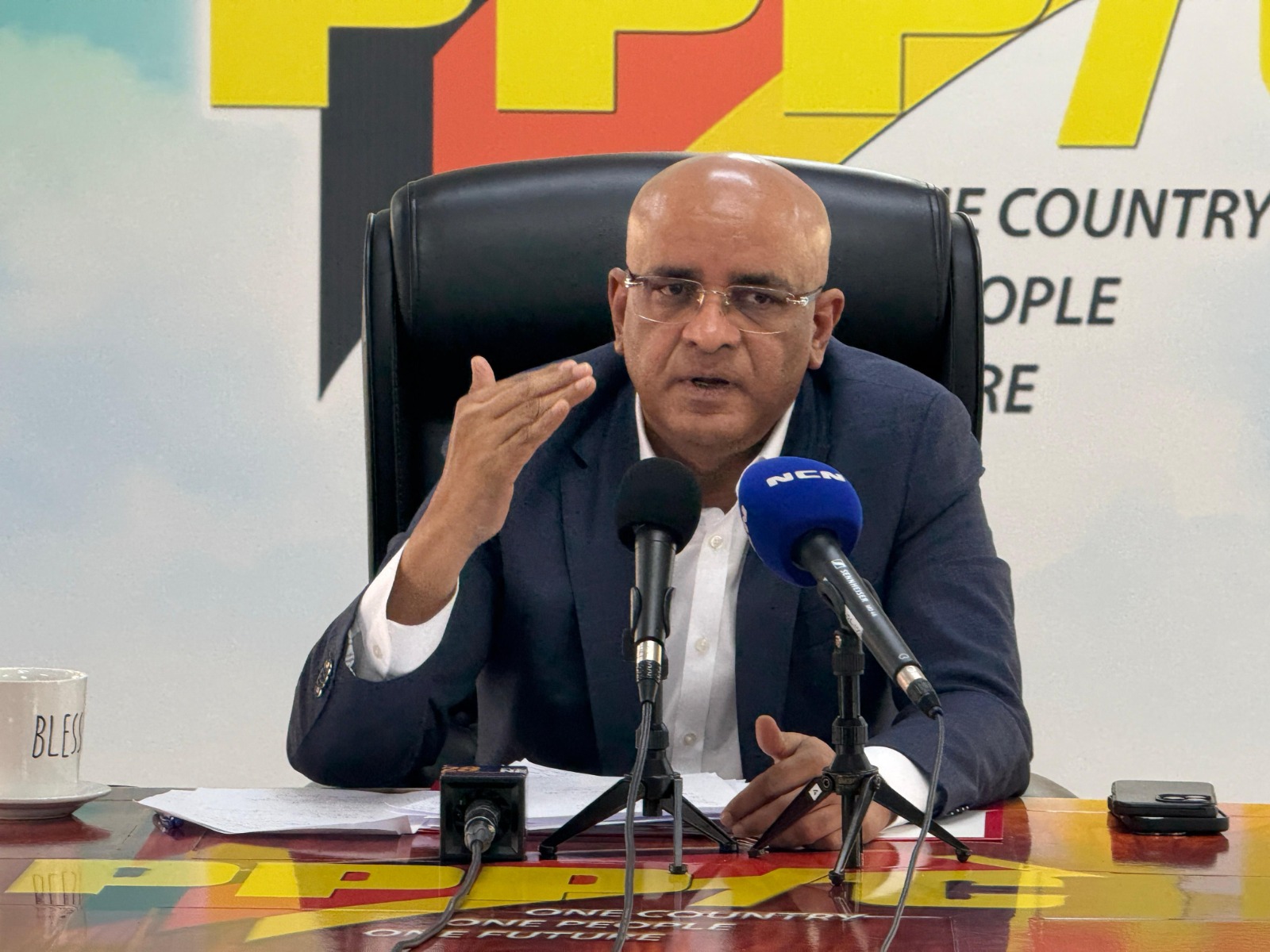
This is according to Guyana’s Vice President (VP) and General Secretary of the People’s Progressive Party (PPP), Dr Bharrat Jagdeo, who gave the assurance during his weekly press briefing at Freedom House on Thursday.

Dr Jagdeo also stated the government’s intentions to engage with the US during the current 90-day hold on the reciprocal taxes, in an effort to address the issue.

“We’re also meeting with the exporters who would be affected. A large amount of our exports are exempt—particularly oil, bauxite ore, and gold exports—from the reciprocal tariffs. But there are some crucial sectors that could be badly affected, mainly the agricultural sector and their exports. So, we’re meeting with the exporters to understand the impact of any potential tariffs,” Dr Jagdeo stated.

He explained that the government will work with the United States to examine all the facts surrounding the matter.

“President Trump has announced that the reciprocal tax has been put on hold for 90 days and that the United States of America is prepared to have discussions with countries about the reciprocal tax, and that 75 countries have already reached out to address the question of the reciprocal taxes or tariffs. So, we’re one of those countries. There is no room for panic, nor should we behave in a manner that is antagonistic to the United States of America. We expected higher tariffs, but we still believe that it is through engagement with the United States that we can resolve this matter, and that will be our approach. We have all the facts ready to present in the engagement,” the Vice President said.

He further refuted statements by the opposition regarding a holistic response plan to the issue, noting that he has not seen a single serious suggestion from the party on how to address the matter.

“They seem to want confrontation with the United States of America. They want us to explore retaliatory tariffs against the US. This is where they seem to be going. They said the tariff imposition was as a result of our negligence. It doesn’t make sense. Our trade surplus really came about because of the export of oil, which is also exported mainly by US companies,” Dr Jagdeo explained.

He noted that, thankfully, there were two positive signals from the US on the matter—namely, the 90-day tariff hold and President Trump’s willingness to engage with affected countries—emphasising that the government is ready to engage.

Chartered Accountant: Right decision to engage US on tariffs

Chartered Accountant Terrence Jaskaran has commended Guyana’s move to engage the United States Government for further information on its 38 per cent reciprocal trade tariff.
In an interview with Ignite News today, Jaskaran highlighted the US’s “clear-cut” intention to revitalise its manufacturing sector and increase exports by imposing global and reciprocal tariffs aimed at reducing large trade deficits, such as the USD $1.2 trillion recorded last year.
Guyana was identified as having high trade surpluses, with two-way trade last year showing the country recorded an almost US$2 billion trade surplus over the US.
Jaskaran outlined several options Guyana could utilise to address the tariff but noted the potential negative impacts, particularly given that the US is a major trading partner.
“Some have suggested that Guyana could seek to retaliate with tariff increases of its own on US imports. However, this would be ill-advised, as it would mean an increase in the cost of US goods entering the Guyanese market. This cost would, in turn, be passed on to Guyanese consumers, resulting in price increases.”
“Additionally, if those imports are raw materials, then it would lead to increased production costs in a local market that already experiences high costs. This would make our locally produced goods—both for export and domestic use—less competitive price-wise.”
Jaskaran continued that, unlike economic powerhouses that have sought to fight ‘fire with fire’ by imposing tariffs of their own on US-made imports, Guyana is in no position to do the same.
This would, among other issues, cause increased consumer prices in both countries, as the costs of the tariffs are passed on to consumers.
“As such, the position taken by the Government in dealing with this matter is perhaps the best at this moment. While other sections in the political sphere may be critical of the Government—especially during this time—the comments made by the Finance Minister, Dr Ashni Singh, should be appreciated. Engaging the US Government, gaining a better understanding of the issue as a whole, and then responding appropriately, is undoubtedly the best step forward.”
The accountant suggested that, ultimately, Guyana may look to reduce its Common External Tariff imposed on US imports, in the hope that the US reciprocates by reducing the newly imposed tariffs.

Jagdeo: Tariffs no surprise, government to engage US for clarity   

Vice President and General Secretary of the People’s Progressive Party (PPP), Dr Bharrat Jagdeo, has stated that the decision by United States President Donald Trump to impose 38 per cent tariffs on goods imported from Guyana was neither surprising nor unexpected.

He made this statement during his weekly press briefing at Freedom House on Thursday.

Dr Jagdeo noted that, rather than being caught off guard, stakeholders had been waiting to see the specific nature of the announcement.

“The United States of America has announced a number of policies that will have implications for trade between Guyana and the US. Given the numerous calls we’ve received from Guyanese businesspeople—both exporters and importers—who are concerned about the impact of these tariffs on their businesses, I wanted to address this issue upfront. It’s no secret that President Trump made it clear during his campaign that, if re-elected, he would seek to address the significant trade imbalance between the US and several other countries. He openly stated that he would extensively use tariff increases as a tool to rebalance trade. So, President Trump’s announcement yesterday was not a surprise to us here in Guyana,” he said.

He went on to emphasise that reacting to the tariff as if it were a sudden or unprecedented move by the Trump administration would be inaccurate, as the policy aligns with the US president’s campaign promises.

“He campaigned on this promise… How did the United States determine the higher reciprocal tariffs? Many assumed it was based on our own trade barriers—meaning higher tariff rates for US goods coming into Guyana—but from what we have reviewed, and based on all available information, it appears that all the countries facing higher reciprocal tariffs are those exporting more to the US than they are importing. Essentially, these are countries with a trade surplus with the United States. So, it seems that the basis for the higher reciprocal tariff is trade surplus rather than individual tariff barriers in each country,” Dr Jagdeo explained.

According to UN Comtrade data for 2024, Guyana exported $3.3 billion worth of goods to the United States while importing $2.56 billion, resulting in a trade surplus of $799 million.

However, Dr Jagdeo pointed out that the United States reported different figures to UN Comtrade, stating that Guyana’s exports to the US totalled $5.5 billion, imports stood at $1.3 billion, and the trade surplus amounted to $4.1 billion.

“So, there are discrepancies between our reporting to UN Comtrade and the US’s report to Comtrade. Clearly, there is an opportunity for us to collaborate with our US partners to clarify this information,” Dr Jagdeo said.

He added that Guyana’s import data indicates the country is importing far more from the United States than what is reflected in the UN Comtrade reports, suggesting that clarifying this data could significantly reduce the perceived trade surplus.

Dr Jagdeo further explained that Guyana’s major trade surplus is primarily due to oil exports in recent years. He noted that there is still room for discussion with the United States on these trade-related matters.
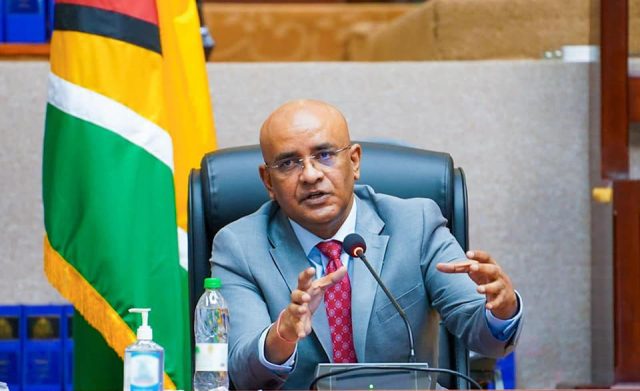
Vice President Dr Bharrat Jagdeo


Guyana urged to approach US tariffs with caution

Financial Analyst, Joel Bhagwandin has urged caution in the way Guyana and its regional partners respond to the United States recent tariffs on imports entering that country.
The US’s Donald Trump administration on Thursday slapped massive tariffs on several countries in what he described as America’s “liberation day” in trade.
Guyana was hit with a reciprocal tariff of 38 per cent, much higher than the 10 per cent tariff allotted to several other Caribbean nations.
Bhagwandin noted that a more in-depth look at the situation will be useful for Guyana before the country acts, particularly where retaliatory measures are concerned.

“In Guyana’s case, a retaliatory response may not necessarily be the desired approach since import duties and VAT are applied to US imports. While I appreciate this is a complex issue and would require far more in-depth analyses, we can nonetheless construct a simple scenario analysis to understand the implications and issues of fairness in the application of the 38 per cent US tariff,” he said.
Bhagwandin explained that Guyana’s Common External Tariff (CET) rate ranges from five per cent to 20 per cent, a tariff rate of 40 per cent on agricultural products and duties that attract 14 per cent VAT equally applied to imports and locally produced goods and services, with exceptions to certain green technologies.
He explained further that Guyana has no blanket rate of CET applied to US imports, and contended that the various rates could have little to no impact, or place Guyana in a worst position.

As for CARICOM, he said that the issue would have varying degrees of impact for regional nations, which would require them to examine the matter individually and as a bloc to assess impacts, implications and responses, and not necessarily to form retaliatory measures.
“With that in mind Guyana and the CARICOM region would have to perform firstly a more thorough analyst to understand the full implications and would have to consider a general revision or reduction of current CET rates that apply with the view that the US would reciprocally reduce their tariff rates applicable to Guyana and the region,” Bhagwandin advised.
The United States is the leading trade and investment partner for Guyana. According to the US Department of Commerce’s 2023 bilateral trade report, two-way trade reached approximately $4.5 billion, with Guyana enjoying a surplus of nearly $2 billion.
Major US exports to Guyana included machinery, petroleum products, fabricated metal products, chemicals and computer and electrical products, the US Embassy in Georgetown said.
Major Guyanese exports to the United States included oil and gas, minerals and ores, primary metal manufactures, and processed foods.

Guyana seeks resolution as US imposes 38 per cent tariffs on exports

The Government of Guyana said on Wednesday it is engaging with US officials after Washington announced new reciprocal tariffs on imported goods, including a 38 per cent tariff on Guyanese products.

In a statement issued through the Ministry of Finance, the government said it is working closely with its US counterparts “to better understand the issue and have it addressed as appropriate.”

The tariffs were part of a broader trade measure announced by US President Donald Trump, who unveiled what he described as “kind” reciprocal tariffs affecting more than 180 countries.

Speaking at the White House Rose Garden, Trump said the move was aimed at balancing trade relationships.

“For too long, other countries have taken advantage of the United States. These tariffs are fair and reciprocal,” he said.

Forbes Magazine reported that the new policy marks one of the most sweeping tariff measures imposed by the US in decades.

The administration said that any countries not on the list will face a baseline 10 per cent tariff on all products entering the US.

“The tariffs charged to the US include currency manipulation and trade barriers, according to information provided by the administration—though the percentages could not be independently verified,” Forbes reported.

While the administration framed the move as a correction to what it sees as unfair trade imbalances, analysts warn it could trigger retaliatory measures from affected nations.