Suriname, Guyana leaders pledge energy cooperation, advance border, trade talks

Suriname and Guyana have agreed to strengthen cooperation in the oil and gas sector, alongside renewable energy and electricity interconnection, as the two South American neighbours seek to deepen ties across multiple fronts.

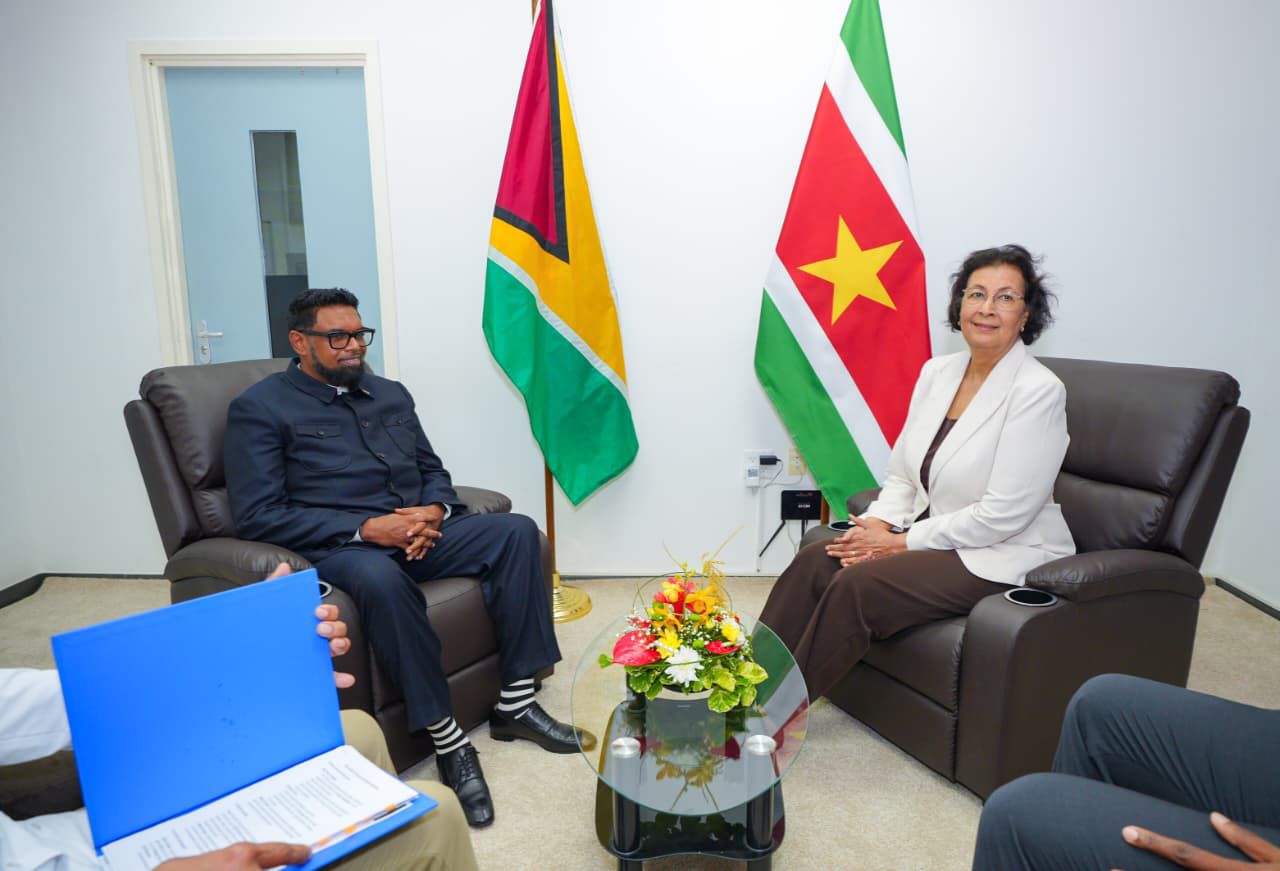
The agreement followed a meeting today in Nieuw, Nickerie between Suriname’s President Jennifer Geerlings-Simons and Guyana’s President Dr Irfaan Ali.

In a joint statement, the leaders said discussions centred on energy security, trade, agriculture and border management. They noted that joint ventures, investment and knowledge-sharing in energy would support national development priorities while enhancing regional resilience.

The presidents also spoke about the Corentyne River bridge, describing it as a transformative project for trade, tourism and connectivity in the Amazon region. Both sides pledged close coordination to resolve outstanding legal, technical and financial issues.

On border matters, Ali and Geerlings-Simons reaffirmed their commitment to peaceful settlement in accordance with international law, agreeing that the Suriname-Guyana Joint Border Commission would convene its long-delayed seventh meeting before year-end.

The talks also advanced cooperation in agriculture and fisheries, with a new joint commission of fisheries ministers, technical teams and stakeholders to be established before the end of 2025. Agricultural collaboration will continue under the Strategic Dialogue and Cooperation Platform (SDCP).

The leaders further underscored the importance of the Canawaima Ferry Service for border communities and cross-border trade, agreeing on the urgent need to improve its reliability. They also voiced support for a wider regional ferry initiative to enhance integration.

Reaffirming the SDCP as the primary mechanism for bilateral dialogue, the two leaders instructed their foreign ministers to follow up on all decisions.

In closing, Ali and Geerlings-Simons pledged to maintain the Caribbean as a zone of peace, strengthen cooperation within CARICOM and South America, and intensify efforts against transnational crime.
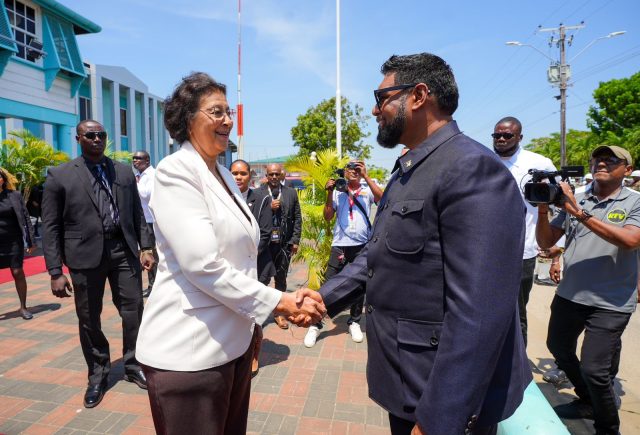
President Ali is greeted by Suriname’s President Jennifer Geerlings-Simons (OP photo)
US trade court rules Trump overstepped his authority with global tariffs

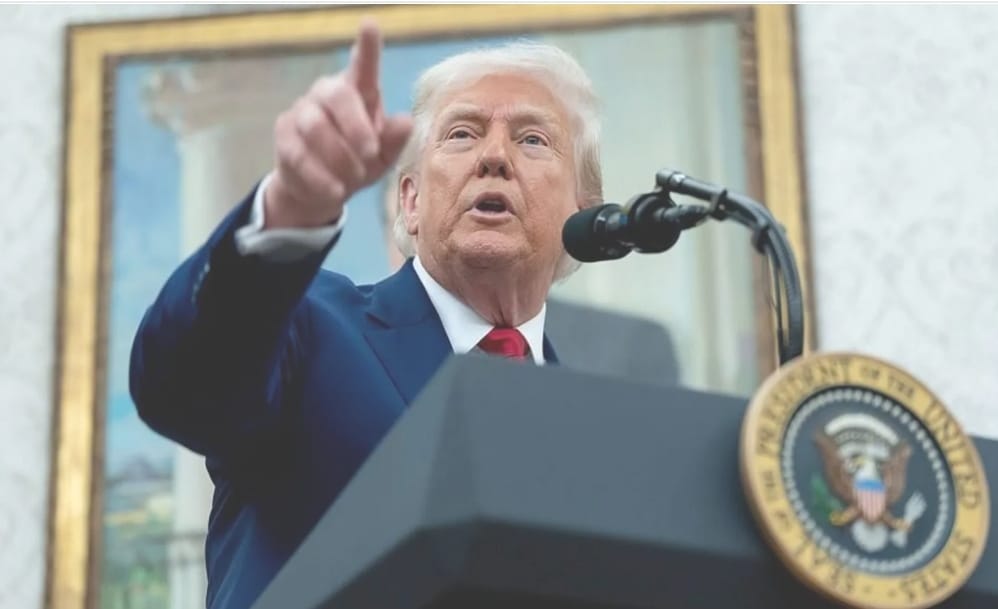
A US federal court has ruled that President Donald Trump overstepped his authority by imposing global tariffs, in a major blow to a key part of his economic policies.

The Court of International Trade ruled that an emergency law invoked by the White House does not provide unilateral authority to impose tariffs on nearly every country.

The Manhattan-based court said the US Constitution gives Congress exclusive powers to regulate commerce with other nations and this is not superseded by the president’s remit to safeguard the ececonomy.

Within minutes of the ruling the Trump administration lodged an appeal.

“It is not for unelected judges to decide how to properly address a national emergency,” White House deputy press secretary Kush Desai said in a statement.

“President Trump pledged to put America First, and the Administration is committed to using every lever of executive power to address this crisis and restore American Greatness,” he added.

The lawsuit, filed by the nonpartisan Liberty Justice Center on behalf of five small businesses that import goods from countries targeted by the duties, was the first major legal challenge to Trump’s so-called “Liberation Day” tariffs.

The case is one of seven legal challenges to the administration’s trade policies, along with challenges from 13 US states and other groups of small businesses.

In the ruling, a three-judge panel said the International Emergency Economic Powers Act (IEEPA), a 1977 law that Trump cited to justify the tariffs, does not give him the power to impose them sweepingly.

“The Worldwide and Retaliatory Tariff Orders exceed any authority granted to the President by IEEPA to regulate importation by means of tariffs. The Trafficking Tariffs fail because they do not deal with the threats set forth in those orders,” they wrote.

Global financial markets have been on a rollercoaster ride since Trump announced the sweeping tariffs on 2 April as some measures were reversed or reduced as the White House negotiated with foreign governments. (BBC News)

Guyana, Brazil seek to deepen trade, economic ties

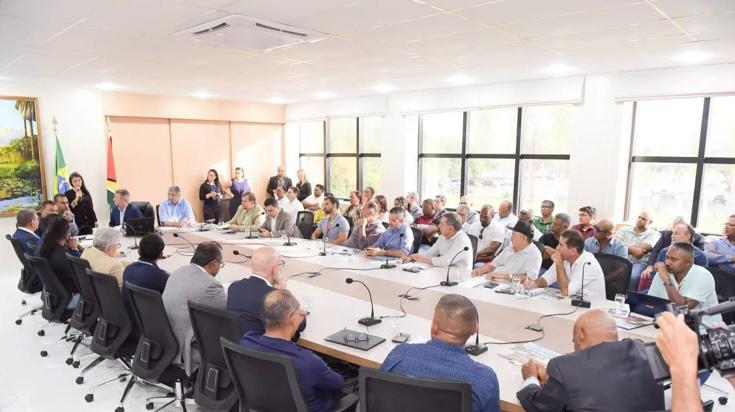
Guyana and Brazil are seeking to deepen trade and economic ties as part of ongoing efforts to improve cross-border relations between the two countries.
This comes on the heels of a Guyanese public and private sector trade mission to Boa Vista, aimed at exploring trade and investment opportunities with Northern Brazil and expanding collaboration in areas such as agro-processing, manufacturing, construction, tourism, food distribution, and port development.
Additionally, the two sides are in active discussions about the operation of the Guyana-Brazil International Road Transport Agreement (IRTA), which would increase the movement of goods and people.
According to the Department of Public Information (DPI), Guyana’s Foreign Secretary, Robert Persaud, who led the discussions on Guyana’s side, noted that while the two countries have shared excellent political and diplomatic relations for decades, they have not been able to fully develop economic ties.
In this regard, he expressed the wish of President Dr Irfaan Ali for the trade mission to examine new ways to do so, particularly at the private sector level.
During initial consultations, the Brazilian side expressed interest in exploring collaboration in technological transfer, exchange programmes between the University of Guyana and the University of the State of Roraima in the fields of engineering and agriculture, research, importation of fertilisers, improving air connectivity between Georgetown and Boa Vista, and the development of a fibre-optic cable between the two countries.
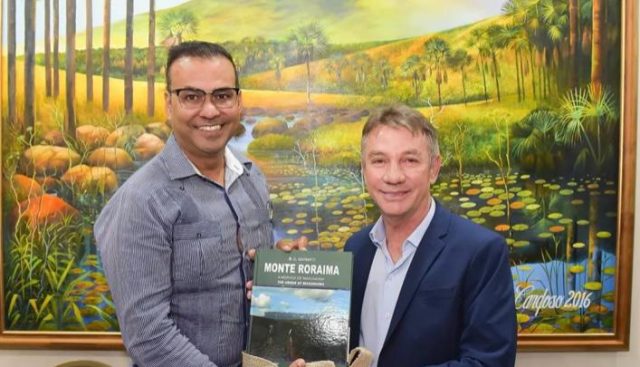
On Monday, the Guyanese team met with the Governor of the State of Roraima, Antonio Denarium, to exchange views on areas of interest and explore possible areas of cooperation.
The Governor expressed the readiness of the State of Roraima to expand trade and economic relations with Guyana, noting that the state offers an excellent environment for investment. He also outlined the progress made in Roraima since his appointment in 2018 in terms of GDP growth, poverty reduction, and job creation.
Meanwhile, Persaud provided an update on major infrastructure projects in Guyana, including the Linden-Lethem Road, expansion of airports, and port development, which would position Guyana as a logistical hub with enormous opportunities for Northern Brazil in terms of shipping.
In an effort to increase trade in a mutually beneficial way, the Foreign Secretary highlighted the need for a review of the Partial Scope Agreement, the framework under which trade is conducted between the two countries.
The Guyanese side expressed interest in increasing trade in construction materials, the importation of soya beans, corn, and grain for the Guyanese and Caribbean markets, port development, and market access.
Persaud expressed gratitude to the people and Government of Brazil for their unwavering support of Guyana’s territorial integrity and sovereignty and for standing with Guyana against Venezuela’s aggression.
In his remarks, Chief Investment Officer of Go-Invest, Dr Peter Ramsaroop, described Guyana as an investor-friendly environment, with a strong investment policy framework and robust trade agreements aimed at facilitating trade.
He also emphasised the importance of moving beyond government-to-government discussions and positioning the private sector as a driving force in the expansion of trade and investment between the two countries.
The Guyanese team will also meet with the Secretariat of Agriculture, the Director of Foreign Commerce, Support Service for Micro and Small Enterprises (SEBRAE), the State Department of Tourism, Dry Port Authorities, the Brazil-Guyana Chamber of Commerce, and the Federation of Industries of the State of Roraima.

Foreign Secretary, Robert Persaud with Governor of the State of Roraima, Antonio Denarium

Foreign Secretary, Robert Persaud with Governor of the State of Roraima, Antonio Denarium

Trade barriers being addressed ahead of tri-state ferry launch

Private sector businesses eagerly await the launch of the much-anticipated tri-state ferry and are working diligently to address, in particular, trade barriers that could hinder the smooth movement of goods.

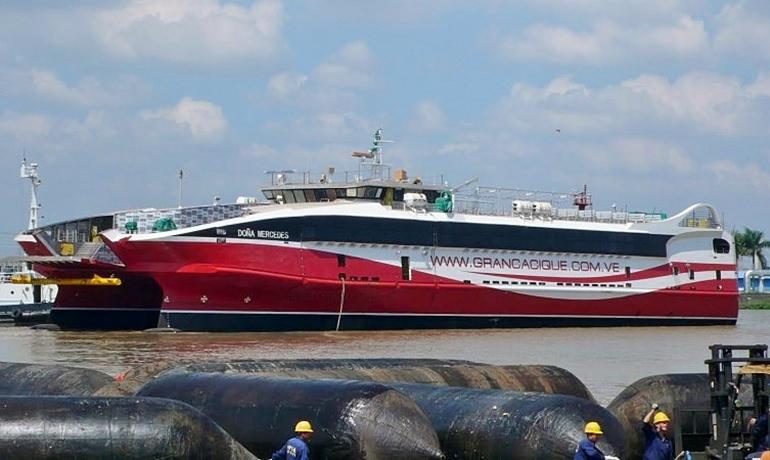
This service involves Guyana, Trinidad and Tobago, and Barbados, as the three nations formed a joint company last year to facilitate the introduction of a ferry system that will transport both passengers and cargo.

While work is still ongoing at a governmental level regarding the necessary arrangements, Private Sector Commission (PSC) Chairman, Komal Singh, stated that significant efforts are being made on the business front to ensure swift adaptation when the service is finally launched.

He told Ignite News that, for instance, there are certain non-tariff barriers within the region that will need to be addressed, as local traders would want to avoid sending goods that could be rejected by the other countries.

In this regard, Singh noted that the private sector is engaging with the relevant bodies, such as the CARICOM arm, the Council for Trade and Economic Development (COTED), where most of these trade matters are being discussed.

Singh referenced the ongoing honey issue, in which Guyana is currently unable to export honey to Trinidad, as one of the matters already under review. He added that information reaching the PSC suggests that “the Trinidad government is moving aggressively to get the matter resolved.”

Local business operators have previously lamented the ban or rejection of some Guyanese goods by Trinidad. These include poultry meat, peppers, pineapples, and honey.

President Dr Irfaan Ali highlighted last year that Parika would be developed as a standard port for the trade vessel. He stated that a key advantage of the Parika location is that goods could be moved directly from there to the region, rather than being transported first to a city port.

Prime Minister Keith Rowley informed Trinidadians last year that the ferry decision was driven by the need to transport raw materials and fresh produce from producing areas to consumption and manufacturing locations within the CARICOM sub-zone.

“The private sector will fully support the venture, as we see it as highly beneficial for the movement of goods and services in the region,” the PSC Chairman stated.

He told Ignite News that the region currently lacks a robust logistics hub to facilitate the swift transportation of specialised agricultural produce to the islands. “When this ferry becomes operational, in our view, it will add significant value to the agricultural sector and other industries by enabling the rapid movement of goods between the islands,” he said.

In addition to the tri-state ferry, the region is also working on a regional ferry that will encompass all CARICOM states. The push for these ferry services stems from CARICOM’s initiative to reduce its food import bill by 25 per cent by 2025. The free and efficient movement of goods and services is one of the key strategies regional states are pursuing to achieve this goal.