Rodríguez pushes negotiation on Guyana’s non-negotiable Essequibo region

Venezuela’s acting President Delcy Rodríguez on Monday called for dialogue with Guyana, insisting that negotiations between the two countries remain the only path to resolving Caracas’ claim over the Essequibo region.
Addressing the International Court of Justice, Rodriguez argued that the 1966 Geneva Agreement remains the only valid legal instrument for settling the territorial controversy.
“We have reached a historical moment where we can demonstrate that dialogue and negotiations are the path toward co-existence, happiness and wellbeing of our people… a high-level bilateral meeting organised by key regional stakeholders will without a doubt be far more productive and effective in achieving that goal,” she said.
Guyana has maintained that it will not pursue a negotiated settlement with Venezuela and instead seeks a judicial resolution through the ICJ. The case was brought before the court under a provision stemming from the 1966 Geneva Agreement.
The agreement, signed between Venezuela and the United Kingdom before Guyana’s independence, established a framework for resolving the border controversy and authorised the United Nations Secretary-General to determine a means of peaceful settlement if negotiations failed.
In 2018, U.N. Secretary-General António Guterres referred the matter to the ICJ after decades of unsuccessful negotiations, paving the way for the court to hear the case.
Rodriguez said Venezuela did not disrespect the court but claimed that the Geneva Agreement outlined steps for resolving the dispute without third-party intervention.
“This is a matter of defending one of the essential attributes of our state namely its sovereignty. Venezuela has never consented to submitting the territorial controversy over Guiana Essequibo to the jurisdiction of this court; in no way does Article 4 of the Geneva constitute a compromissory clause,” she said.
Edward Craven KC, who appeared on behalf of Guyana, told the court that Venezuela had accepted and sought to enforce the 1899 Arbitral Award for decades before challenging it shortly before Guyana gained independence.
He argued that Venezuela’s claims lacked merit.
Guyana has repeatedly reaffirmed that sovereignty over the oil-rich Essequibo region is not open to bilateral negotiation and maintains that the 1899 arbitral award establishing the border is valid and binding.

Venezuela’s acting President Delcy Rodríguez

Caracas threatens Guyana and Trinidad amid growing tensions with US

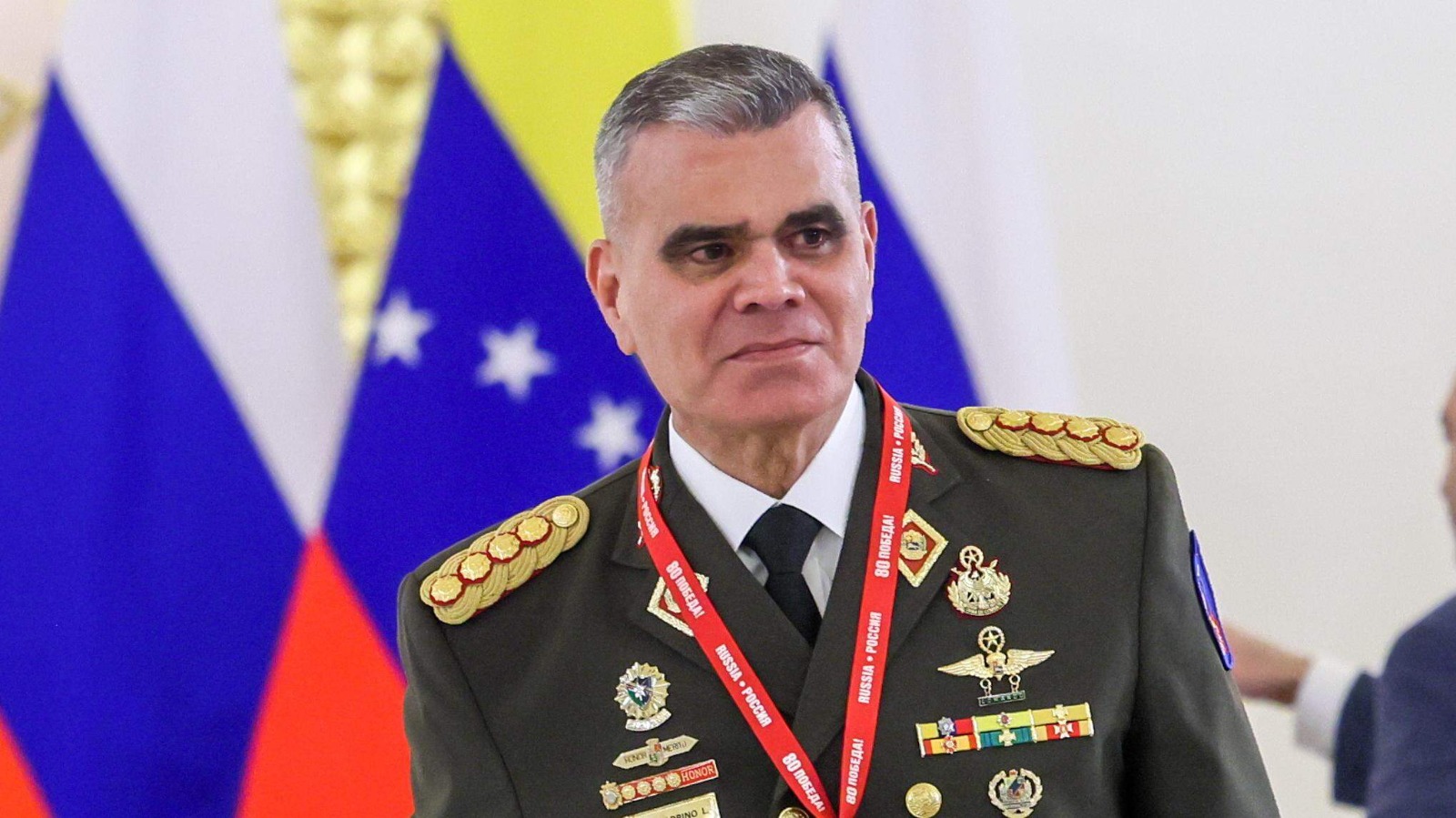
Venezuelan Defense Minister Vladimir Padrino López has issued a stark warning to neighboring Guyana and Trinidad and Tobago, saying Caracas would retaliate if any attack against the country were launched from their territories.
“I tell these governments… that if we are attacked from their territory, they will also receive a response, and that is in legitimate defense,” Padrino declared in a video shared on his Telegram channel Sunday. The defense minister’s words underscored mounting tensions in the Caribbean, where US military operations have expanded under the banner of counternarcotics enforcement. Caracas insists the buildup is part of a broader campaign directed at undermining President Nicolás Maduro’s government. Padrino accused Washington of sharply intensifying aerial surveillance of Venezuela, citing a surge in spy flights last month. “Now they moved from a daytime pattern to doing it at night and at dawn, and tripled in August the intelligence and reconnaissance operations against Venezuela,” he said. According to the minister, US aircraft are not simply conducting routine patrols but are equipped to monitor Venezuelan territory in real time. The planes, he claimed, are “designed to collect and process information in real time, up to 200 miles, meaning their range reaches Venezuelan territory.” In his remarks, Padrino also accused the United States of harbouring aggressive intentions against Venezuela. “We know the deployment they have in the Caribbean with every intention of sowing war,” he said. He said US forces recently detained a Venezuelan tuna-fishing boat for eight hours before releasing it. No details were provided about the location or identity of the vessel. The warning to Guyana and Trinidad and Tobago echoed earlier rhetoric from Venezuela’s leadership. Vice President Delcy Rodríguez last week branded both countries “vassals” of the United States. “You should take it easy, don’t dare, don’t even think about it. You are lending yourselves to the perverse plans of an aggression against the Venezuelan people,” Rodríguez said.
Her comments reflected a deepening dispute between Caracas and its neighbours over their support for Washington’s regional operations. Trinidad and Tobago responded swiftly, with Prime Minister Kamla Persad-Bissessar rejecting any suggestion that her government was colluding with the United States against Venezuela. She dismissed the allegations as “alarmism,” stressing there were no agreements to invade Venezuela or send Trinidadian troops across the border. Guyana has not publicly commented on Padrino’s most recent statement. However, Georgetown has previously voiced support for US activities in the Caribbean, framing them as part of collaborative counternarcotics efforts. The Venezuelan defense minister’s accusations come against the backdrop of the long-running territorial controversy over the Essequibo region, a resource-rich area claimed by both Venezuela and Guyana. Caracas has repeatedly warned that Georgetown’s alignment with Washington could heighten risks in the controversy. While Venezuela’s leaders accuse the United States and its allies of preparing for aggression, Washington has focused its rhetoric on crime and drug trafficking. On Sunday, President Donald Trump described Venezuela as a hub of narcotics smuggling and criminal migration. “I know exactly what’s happening. A lot of drugs are leaving Venezuela. Many [members of] the Tren de Aragua are trying to leave, but we are successfully stopping them at the border in Venezuela,” Trump told reporters at the Morristown, New Jersey, airport. The president singled out Tren de Aragua, a powerful Venezuelan criminal organisation that has spread across Latin America, as an urgent security threat. He characterised the gang as “probably the worst gang in the world,” arguing it was even more dangerous than MS-13, which has long been a focus of US law enforcement.
Trump reiterated his rejection of what he described as the Maduro government’s exports of crime and drugs. “We don’t like what Venezuela is sending us, whether it’s their drugs or their gang members,” he said. “We don’t like it. We don’t like it one little bit.” (Maimi Herald)