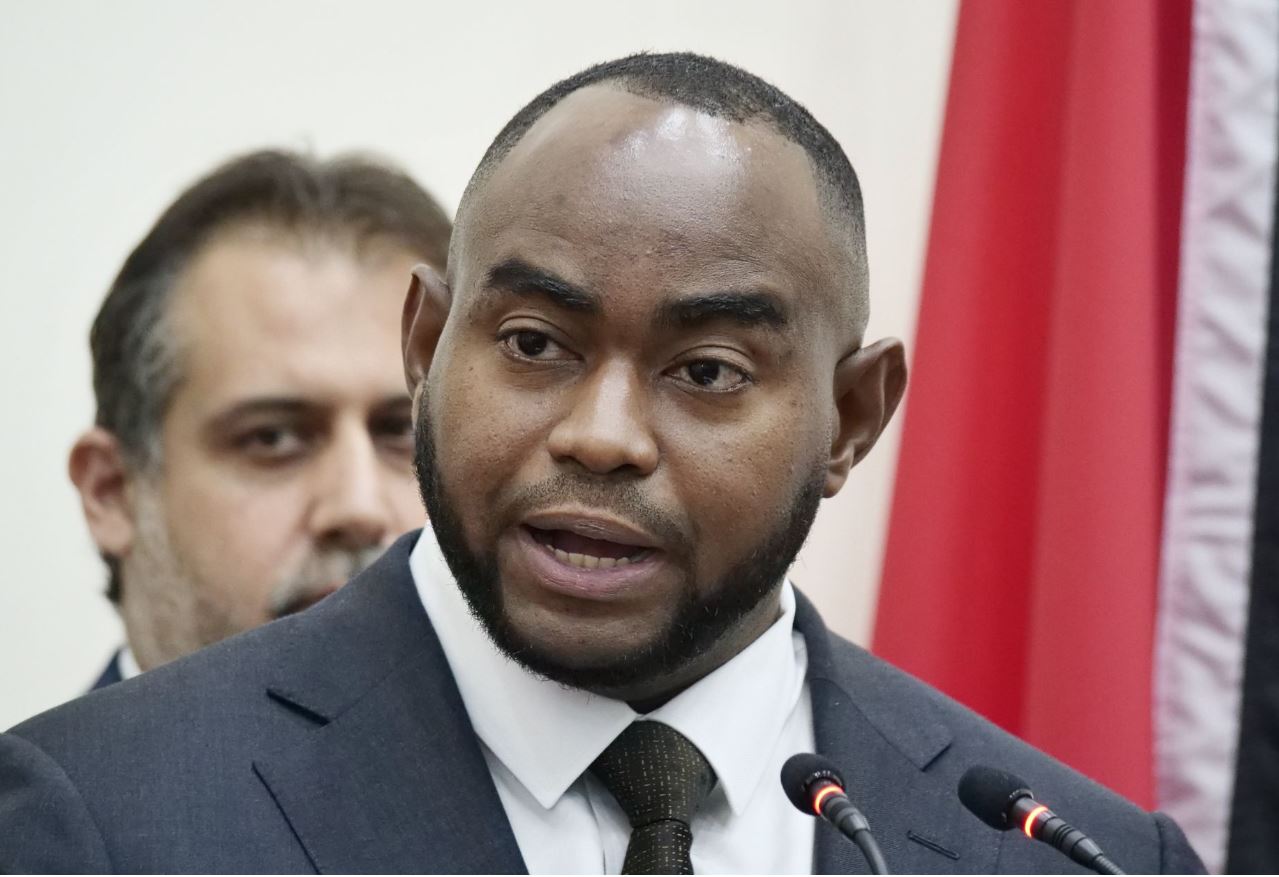
“We do not respond well to threats at all.”
This was the defiant stance taken by Foreign and Caricom Affairs Minister Sean Sobers during a telephone interview with Guardian Media, making it clear that this country would not be intimidated.
His comments came after Venezuelan Defence Minister Vladimir Padrino López said Trinidad and Tobago, along with Guyana, could face reprisals if their territories were used by the United States in any military action against Venezuela.
“To those who sent a written statement from the United States, I am referring to the governments of the Cooperative Republic of Guyana and the government of Trinidad and Tobago, who have played along. I say to you, well, if they attack from your territory, you will also receive a response, and that is legitimate defence,” Padrino warned.
Last Thursday, Venezuelan Vice President Delcy Rodríguez also cautioned, “Don’t even think about it.”
Sobers stated that the government would safeguard its sovereignty while supporting US efforts to combat transnational crime in the region.
“We all, in the Southern Caribbean, should be happy for the level of intervention that is taking place by the US here to finally have a zone of peace,” he said.
“Any other conversation, contrary to that, has to be coming from somebody who is happy with the state of affairs that we inherited as an administration, which is a murderous, runaway horse Caribbean community where crime and criminality is affecting the majority of the countries within Caricom,” he added.
The minister insisted that T&T was “in 100 per cent support of American intervention in this particular case” and stressed that relations with Caracas remain intact.
“And to all else who threatens about who there, and who this, and who that, and who not, and who coming, and who going. That’s their business. They can say what they want in Venezuela with the greatest of respect,” he said.
“To the Government and to the people of Venezuela, as far as I’m concerned, we are still on very good terms.”
Sobers said he maintained a strong working relationship with Venezuelan Ambassador Álvaro Enrique Sánchez Cordero. He also addressed comments from Venezuelan President Nicolás Maduro, who questioned whether Prime Minister Kamla Persad-Bissessar was being guided by others, comparing her stance to that of US Senator Marco Rubio, whom he labelled “the lord of death and war”.
“She takes no instructions from anyone,” Sobers said.
“We are a sovereign country, and our decisions are made by virtue of a Cabinet that meets and makes decisions for the peace and the betterment of Trinidad and Tobago.”
The Foreign and Caricom Affairs Minister also revealed that the deportation of 200 Venezuelans has been delayed by what he described as “certain steps” taken on Venezuela’s end, though he declined to give details, citing “matters of national security”.
Persad-Bissessar criticised Caracas on Monday for stalling the repatriation of what she described as “200 criminal migrants” for two months.
Sobers explained that the deportation process falls under the Immigration Division of the Ministry of Homeland Security. He noted that foreigners can be deported if they enter the country illegally, commit a criminal offence, or work without a permit.
The deportation can be stayed if individuals qualify through birth or descent. He acknowledged T&T’s obligations under the UN Refugee Convention but stressed that domestic law takes precedence.
“The Government will deport people, illegal persons within this country, who, one, entered illegally; two, who entered legally but breached the terms and conditions that were placed upon their passport by way of the stamp when they entered the country legally; three, persons who entered legally or illegally and they’ve committed criminal acts within the country—those are the classes of persons that the government will deport.
“And if, out of those classes of persons, you have people who have attempted to claim refugee status through the UNHCR, or through other organisations, but they fall within those categories by breaking the law, then absolutely, we will deport you.”
However, former foreign and Caricom affairs minister Dr Amery Browne accused the government of mishandling relations with Venezuela.
“This reckless posture will take a long time to repair and will have negative effects on various aspects of important work with our largest and nearest neighbour in a range of areas, including immigration collaboration, energy collaboration, search and rescue, fisheries, and collaboration between our coast guard and their counterparts,” he said.
Browne added that under the People’s National Movement, similar deportations were carried out “without fanfare, provocation, or undue tension” through established diplomatic channels.
He also criticised what he called “insulting commentary” from the Prime Minister directed at Colombia’s President after Bogotá requested assistance in locating the bodies of 11 Venezuelans killed during a US operation targeting suspected traffickers.
Guardian Media contacted Venezuelan Ambassador Álvaro Enrique Sánchez Cordero, who said he was awaiting clearance to respond. However, he forwarded remarks from President Maduro, who, during a media conference on Monday, said, “Although the communications with the US are broken, we keep the minimum communication necessary to bring back our migrants, which is a top priority for the Government and Venezuelan families.” (T&T Guardian)


 Submit News
 About us
 Advertise
 Contact us


 Aug 09, 2026
  1 min read