Jagdeo: World Bank poverty data do not reflect current reality

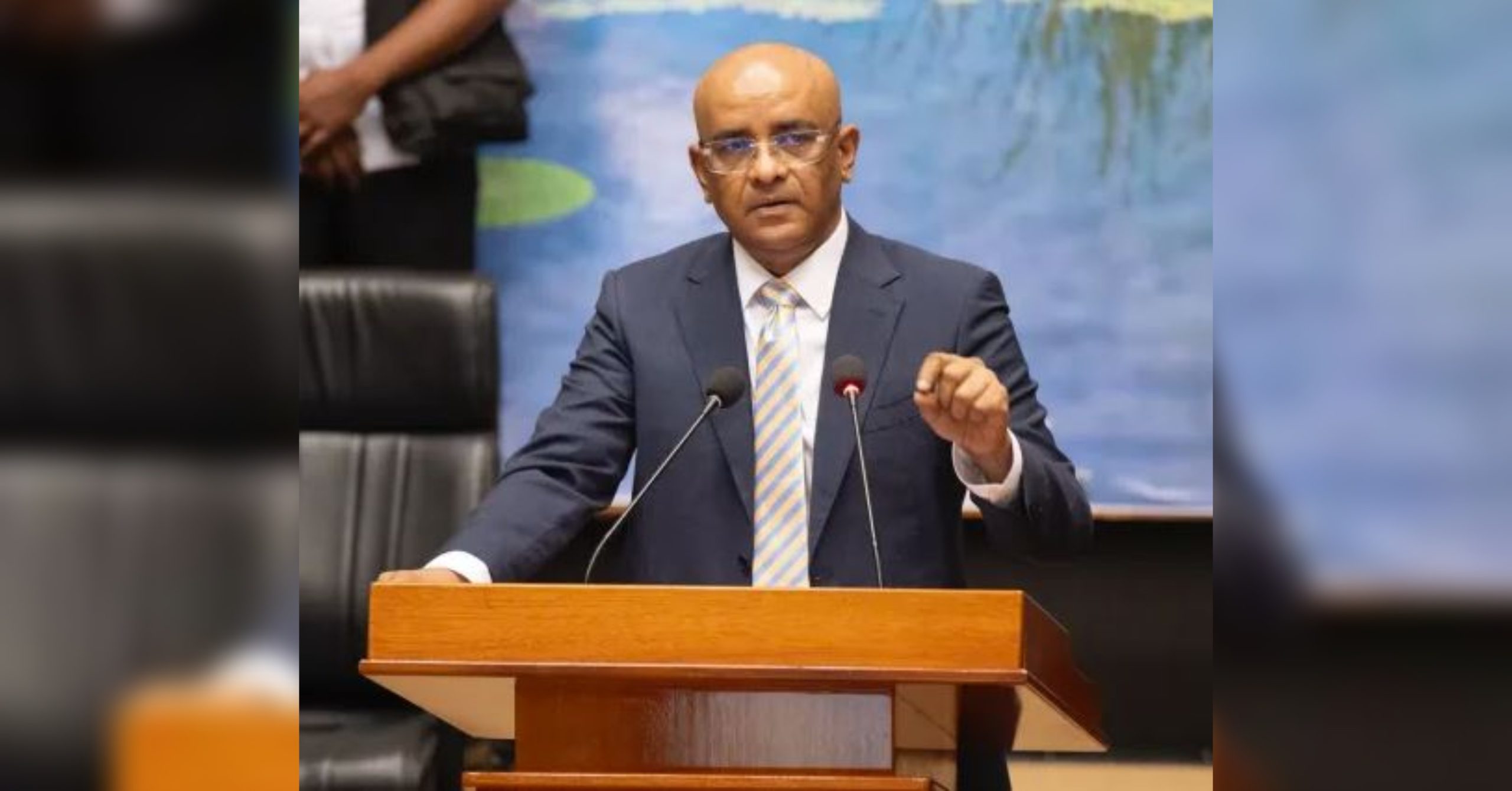
General Secretary of the People’s Progressive Party (PPP), Dr Bharrat Jagdeo has shut down claims by the Opposition that half of Guyana is living below the poverty level.

Responding to a question posed by a reporter during his weekly press conference at Freedom House on Thursday, the General Secretary clarified that the data which was cited from the World Bank was derived from a 2018-2019 survey.

He stressed the need for an updated survey, which he said would paint an entirely different picture.

“It is 2018-2019 data, and Nigel Hughes keeps repeating it as though it’s current, and everybody clarified that already. This is what happened under APNU [A Partnership For National Unity],” Dr Jagdeo said.

He related that there has been massive improvements under the PPP administration which has led to improved living standards for Guyanese.

“From then to now, old age pension has been doubled, sixty thousand people…are working, we now have better access to healthcare, the children have a grant, a whole range of things have changed from 2018 to now,” he said.

He stressed that the World Bank itself has also clarified the use of the data, noting that the information released in 2019 and not recently.

“I think we need to have another survey done because it was a household income expenditure survey. We need to look at that. What it would show is that tonnes of people more are working, earning– look at the disposable income level again, look at public sector,” he emphasised.

Dr Jagdeo continued that a look at the 2020 wage bill is different to what it is today, noting that it is nearly 120 billion dollars more.

“That’s a lot of money, I was thinking 600 million US dollars more per year…,” he said.

Word Bank approves US$22M Guyana One Health Project

The World Bank has approved the US$22 million Guyana One Health Project, focused on empowering the country to prevent, prepare for, and respond to health emergencies.
The project will adopt a One Health approach, which integrates human, animal, and environmental health systems.
Guyana faces an evolving set of public health threats. Non-communicable diseases account for 70 per cent of all deaths, while infectious diseases such as HIV/AIDS, tuberculosis, and malaria continue to pose major risks.
The threat of antimicrobial resistance (AMR)—when medicines like antibiotics no longer work against infections—is especially pressing.
In 2019, 147 deaths in Guyana were directly attributable to AMR, and 579 deaths were associated with it, making the country the second highest in AMR-related mortality in the Caribbean.

Further, despite a largely government-funded healthcare system that serves around 80 per cent of the population, hinterland regions still experience critical shortages of healthcare workers.
The country’s health information system is also mainly paper-based, making it difficult to track patient care and ensure continuity—especially during emergencies.
To address these challenges, the World Bank and the Government of Guyana, with the support of the Pandemic Fund, have launched a new project that integrates and modernises Guyana’s public health infrastructure.
The Guyana One Health Project will further upgrade and decentralise the laboratory network, including transforming the National Public Health Reference Laboratory into a state-of-the-art facility.
Veterinary and wildlife diagnostic capacity will also be expanded, utilising the One Health approach to improve the ability to detect zoonotic diseases—those that spread from animals to humans—as well as illnesses such as dengue and malaria.
Additionally, laboratories will be weather-resilient and energy-efficient, ensuring continuity of operations even in extreme weather conditions. The project builds upon previous partnerships, including the now-concluded Guyana COVID-19 Emergency Response Project.

“A healthy and productive society is critical for economic growth,” said Diletta Doretti, World Bank Group Representative for Guyana. “This project builds upon earlier health projects which addressed vulnerabilities in the health system, applying a One Health approach, and directly contributes to the nation’s productivity and long-term prosperity.”
The project will also work to digitise the country’s health surveillance systems, replacing outdated paper records with integrated, real-time platforms that link data from across human and animal health sectors—critical for addressing AMR.
Furthermore, it will establish regional surveillance units nationwide, helping to detect and respond to emerging outbreaks closer to their source. Investments will also improve disease monitoring at points of entry, ensuring Guyana’s borders are better equipped to manage cross-border health threats.

Alongside these system upgrades, a new generation of health professionals—from laboratory scientists to port health officers—will be trained and equipped with the skills to detect, report, and respond to outbreaks.
The training will go beyond technical expertise to include guidance on how to identify and support individuals affected by gender-based violence, a risk that often increases during crises.
“The Pandemic Fund is pleased to collaborate with the Government of Guyana and the World Bank on this innovative partnership, which marks another milestone in our efforts to contain infectious disease outbreaks, prevent pandemics, and save lives.
The US$15.6 million grant from the Pandemic Fund is unlocking US$96.5 million, or over six times as much, in domestic and international financing to support Guyana’s efforts,” said Priya Basu, Executive Head of the Pandemic Fund.
Recognising that pandemic prevention must go beyond government systems, the project will support awareness campaigns across farming communities, schools, and households, as well as the private sector.
These efforts will promote responsible antibiotic use, good hygiene practices, and safe interactions with wildlife and livestock—ensuring that public health is a shared responsibility.
The Guyana One Health Project is financed through a US$15 million grant from the Pandemic Fund, along with a US$7 million credit from the World Bank’s International Development Association.

Guyana gets US$30M to improve energy efficiency

The World Bank today approved US$30 million for Guyana to enhance energy efficiency and expand the use of renewable energy in public buildings.

In a release, the bank stated that the funding is part of the Caribbean Efficient and Green Energy Buildings Project, a broader US$131.87 million Caribbean-based initiative aimed at addressing the region’s critical energy challenges and driving economic growth by reducing dependence on imported fossil fuels.

The release also noted that US$40 million has been approved for Grenada and US$30 million for St. Lucia. The project will partner with the Organisation of Eastern Caribbean States (OECS) and the Caribbean Centre for Renewable Energy and Energy Efficiency (CCREEE) to achieve its goals.

The initiative focuses on two key objectives: reducing energy consumption in public buildings and increasing the adoption of renewable energy systems.

It will retrofit buildings with energy-efficient technologies and integrate renewable energy systems, such as rooftop solar panels, into public infrastructure.

The Guyana Energy Agency (GEA) previously announced that Guyana was pursuing funding under this project and had already conducted energy audits on 13 public buildings to identify energy efficiency and renewable energy measures.

The project consists of three main components. The first component focuses on investments in energy efficiency (EE) and distributed renewable energy (DRE).

This will involve retrofitting public buildings with EE and DRE systems, including solar water heaters, battery storage, and improved building control systems. It will also provide technical assistance for identifying, designing, constructing, and operating these systems, along with ensuring the safe disposal of used equipment and materials.

Additionally, capacity-building initiatives will help integrate and manage DRE while developing modern energy management systems.

The second component aims to develop regulatory frameworks that support energy efficiency and renewable energy investments.

It will provide technical assistance for creating institutional and regulatory policies, facilitate market development, and enhance national and regional capacity to implement investments. Furthermore, this component is expected to promote women’s participation in the energy sector.

The third component focuses on project implementation support and capacity building. It will assist national and regional project implementation units (PIUs) in managing and executing project activities. Additionally, it will help develop investment pipelines for future projects and facilitate regional knowledge-sharing events and forums.

“By working together, Saint Lucia, Grenada, and Guyana can address energy sector constraints and prepare for a sustainable, low-carbon future,” said Lilia Burunciuc, World Bank Director for the Caribbean. She added, “The Caribbean stands to gain significant economic benefits from this project, including the creation of green jobs, lower electricity bills for citizens, and enhanced energy resilience.”

This project is funded through various donors and mechanisms. The World Bank’s International Development Association (IDA) is providing US$40 million in concessional financing to Grenada, US$30 million to Guyana, and US$30 million to Saint Lucia.

In addition, US$3.3 million in grants will be provided to the OECS Commission to support pooled procurement at the regional level, while US$0.7 million will be allocated to the Caribbean Centre for Renewable Energy and Energy Efficiency (CCREEE) for technical assistance.

The Global Environment Facility is contributing US$1.791 million to Saint Lucia, and Grenada will receive an US$8.5 million loan from the Clean Technology Fund. Guyana will also receive an US8.2 million loan and a US$0.38 million grant from the Canada Clean Energy and Forest Climate Facility.
This initiative is expected to reduce energy costs, create economic opportunities, and strengthen the region’s energy security through sustainable solutions. By integrating energy-efficient technologies and promoting renewable energy, the project will play a significant role in advancing the Caribbean’s transition toward a more sustainable and resilient energy future.

World Bank approves US$156M project to upgrade Guyana’s road infrastructure


The World Bank’s Board of Executive Directors has approved a new project valued at US$156 million to support Guyana in upgrading and rehabilitating the country’s road infrastructure. The Integrated Transport Corridors Project will focus on enhancing Guyana’s transport network in selected regions, ensuring it is better equipped to withstand natural hazards and provide safer, more reliable mobility for people.

According to a release, Guyana’s road infrastructure faces several challenges, particularly in the coastal regions, where roads are highly vulnerable to extreme weather events.

Over 60 per cent of the road network consists of smaller roads, many of which sit on low-lying coastal plains, making them highly exposed to the impacts of rising sea levels, increased rainfall intensity, and more frequent extreme weather events such as storms and flooding, the release noted.

The most recent flooding event in 2021 caused over US$100 million in damage to the agriculture and transport sectors.

Poor road conditions hinder access to essential services such as healthcare and education, disrupt economic activities, and isolate communities. Additionally, the road safety situation in Guyana is concerning, with a road mortality rate of 15 deaths per 100,000 population.

The project, the Bank said, will focus on upgrading and rehabilitating key road corridors in selected regions of Guyana, with a particular emphasis on improving resilience to natural hazards.

It will implement critical infrastructure improvements such as enhancing drainage systems, stabilising slopes, and raising embankments to prevent erosion, safeguarding vital transport links that support agriculture, tourism, trade, and access to essential services such as healthcare and education.

The project will also prioritise road safety and inclusivity. This includes the safety assessment of the entire primary road network and road safety audits for selected roads, followed by the installation of road safety engineering solutions such as crash barriers and traffic calming measures, as well as the creation of dedicated lanes for non-motorised transport, such as pedestrians and cyclists.

Special attention will be given to high-risk locations such as schools, hospitals, and markets. Mobility plans tailored to the needs of women and other vulnerable groups will feature in the project, along with road asset management systems, creating safer and more inclusive transportation options.

“Guyana’s rapid economic expansion places increasing pressure on infrastructure, while the growing risks from natural hazards such as flooding and storms further challenge the country’s systems. This project will help Guyana’s road network keep pace with its growth by making it safer and more resilient,” said Diletta Doretti, World Bank Group Resident Representative for Guyana.

The project is funded through the World Bank’s International Development Association, the arm of the World Bank that helps the world’s low-income countries.