Trump’s Venezuela takeover will make Guyana oil safer

(Oilprice.com) A couple of years ago, Venezuela’s government decided to revive a territorial claim over much of its neighbour, Guyana. The tiny country was emerging as a major oil producer, and Venezuela wanted a piece. Then came Trump and removed the head of that government.
Essequibo lies between Guyana and Venezuela, with both claiming sovereignty, while Venezuela is planning a referendum on Sunday to determine the territory’s ownership future.
The 61,000+ square mile territory represents about two-thirds of Guyana’s territory and is also the site of a string of huge offshore oil discoveries by Exxon. Those discoveries, the first of which was announced in 2015, were what reinvigorated Venezuela’s claim on the territory.
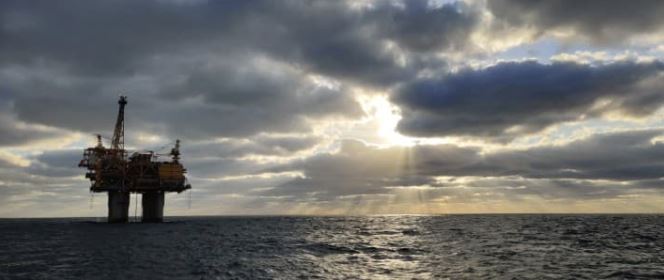
Over the ten years since then, Exxon and its partners in the Stabroek Block have tapped reserves estimated at over 11 billion barrels of crude, and Guyana’s production is rising in leaps and bounds. Last year, Exxon reported output of over 660,000 barrels daily in mid-2025, rising further to 900,000 barrels daily, eyeing production capacity of as much as 1.7 million barrels daily by 2030. But Nicolas Maduro’s ambitions in Essequibo were threatening that.

Now, with the Venezuelan president ousted by the United States, analysts believe oil production in Guyana will go more smoothly, without the risk of the country ceding two-thirds of its territory to its larger neighbour.

“Sighs of relief will have been exhaled in some offices, particularly on the ground, because that’s a constant threat whether you’re trying to manage logistics and so on, or making sure that ships are getting around safely,” Verisk Maplecroft analyst Eileen Gavin told CNBC this week. “These are all offshore facilities — and highly expensive ones at that. So, having the U.S. armada, as they are calling it, is certainly helpful,” she added.

Some noted that an actual incursion by Venezuela into Essequibo was unlikely to begin with, because it would have triggered an immediate U.S. response to protect business interests in oil.

“With Venezuela already in the US’s crosshairs and Exxon the largest operator in Guyana, any aggression would likely have elicited a US response,” Morningstar director of equity research Allen Good told CNBC.

“Now, with the US’s intent to control the country, any action by Venezuela becomes even more remote, removing a nuisance for Exxon and Guyana,” Good noted.

That would be most welcome news to Exxon, which has turned Guyana’s Stabroek Block into a prominent jewel in its crown. Low breakeven costs, massive reserves to recover, and a friendly government determined to make the best of its resources without succumbing to the so-called oil curse—Guyana was a jackpot for Exxon.

It may well be this fact that made chief executive Darren Woods tell President Trump Venezuela was uninvestable without some serious reforms, prompting, in turn, a threat to lock the company out of Venezuela. Would Exxon care? No, it would not because it is the operator of Guyana’s only commercial oil project to date and is reaping all the benefits of that position.
“We’re in a depletion business for a product that is in great demand and will be in demand for many, many, many decades to come,” Darren Woods told President Trump at last week’s meeting with the industry. “And as a depletion business, the biggest challenge we have is finding resources,” Exxon’s top executive also said.

Woods was speaking about Venezuela and the potential opportunities—and challenges there, but at the same time, his speech highlighted all the points that made Guyana a much better bet. It certainly has the resources, it has the investment-friendly legal framework, and, not least, it has no crippling U.S. sanctions to interfere with oil production. Now, with the removal of a Venezuelan incursion, all will be going even better for Exxon in Guyana.
Trump administration to review 55m US visa holders for potential rule violations

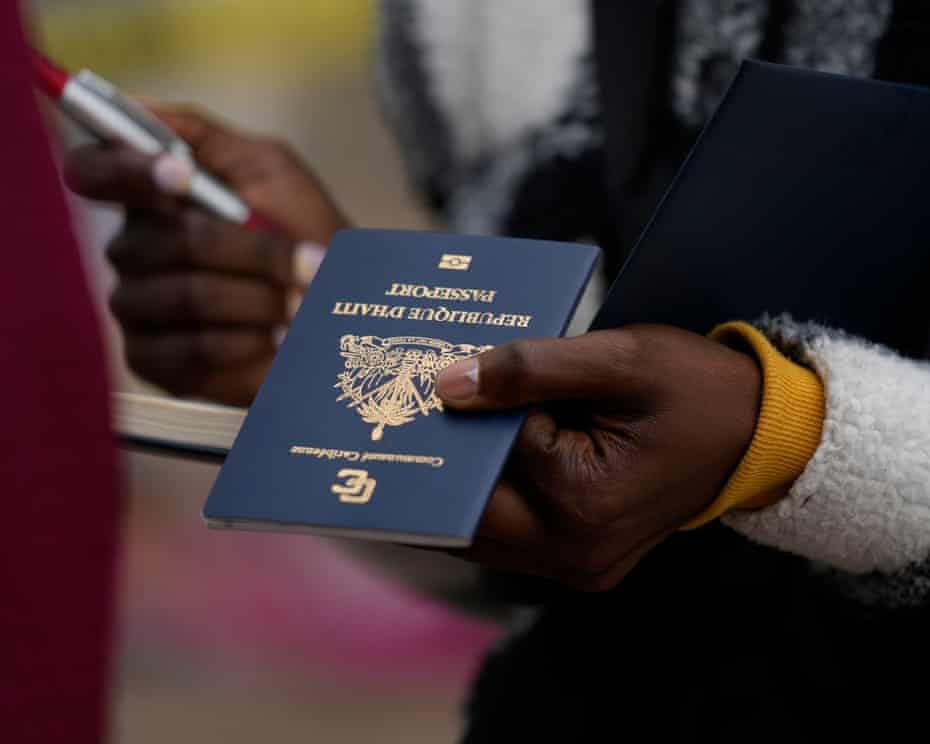
The Trump administration is reviewing the records of more than 55 million US visa holders for potential revocation or deportable violations of immigration rules, in a significant expansion of Donald Trump’s immigration crackdown.

In a move first reported by the Associated Press, the State Department said that all foreigners who currently hold valid US visas are subject to “continuous vetting” for any indication that they could be ineligible for the document, including those already admitted into the country. Should such evidence come to light, the visa would be revoked and, if the visa holder were in the United States, they would be subject to deportation.

“The State Department revokes visas any time there are indications of a potential ineligibility, which includes things like any indicators of overstays, criminal activity, threats to public safety, engaging in any form of terrorist activity, or providing support to a terrorist organization,” a department spokesperson said.

It follows an announcement by the Trump administration on Tuesday that it will look for “anti-American” views, including on social media, when assessing the applications of people wanting to live in the United States.

US Citizenship and Immigration Services (USCIS), which handles requests to stay in the US or become a citizen, said it would expand vetting of the social media postings of applicants and that “reviews for anti-American activity will be added to that vetting.”

“America’s benefits should not be given to those who despise the country and promote anti-American ideologies,” said a USCIS spokesperson, Matthew Tragesser. “US Citizenship and Immigration Services is committed to implementing policies and procedures that root out anti-Americanism and supporting the enforcement of rigorous screening and vetting measures to the fullest extent possible. Immigration benefits – including to live and work in the United States – remain a privilege, not a right.”

Historically, the notion of anti-Americanism has primarily focused on communism. But since taking office in January, the Trump administration has moved aggressively to deny or rescind short-term visas for people deemed to go against US foreign policy interests, especially regarding Israel.

Indeed, the latest guidance on immigration decisions said that authorities will look at whether applicants “promote antisemitic ideologies.”

The Trump administration has accused students and universities of antisemitism and support for terrorism over participation in protests in support of Palestinian rights and against Israel’s military assault on Gaza – charges denied by the activists.

In April, the administration revoked or changed the legal status of hundreds of international students, only to reinstate them several weeks later. In May, student visa interviews were temporarily halted, and then, in June, new social media vetting measures were introduced for international students applying to study in the US.

Under the new measures, foreign students are required to unlock their social media profiles to allow US diplomats to review their online activity before receiving educational and exchange visas. Those who fail to do so are suspected of hiding that activity from US officials.

On Monday, the State Department said it had revoked 6,000 student visas for overstays and violations of local, state, and federal law since the secretary of state, Marco Rubio, took office in January. In the “vast majority” of the cases – approximately 4,000 – visas were revoked because the holders “broke the law” in cases of assault, driving under the influence, burglary, and “support for terrorism.” (The Guardian)

Trump doubles reward to US$50 million for arrest of Venezuela’s president to face US drug charges

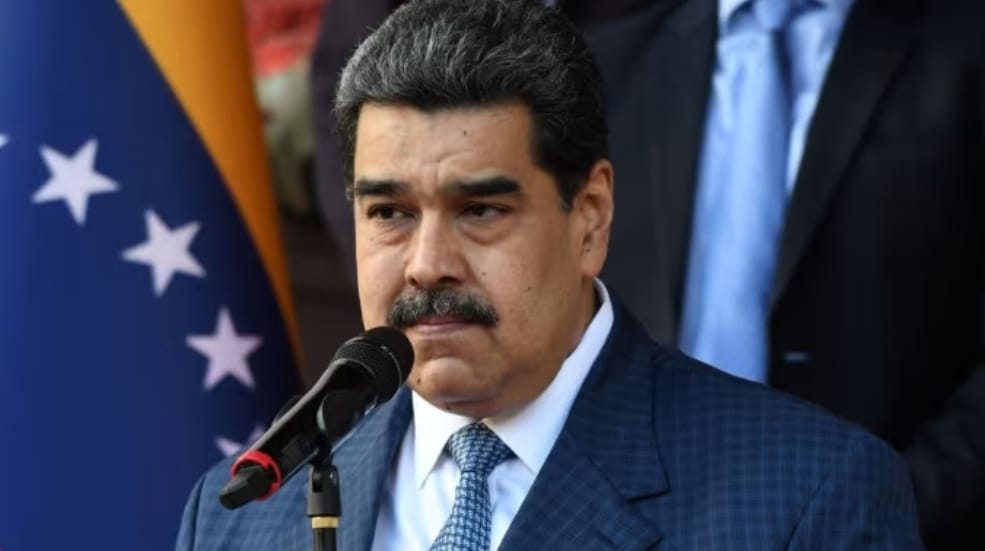
The Trump administration is doubling to US$50 million the reward for the arrest of Venezuela’s President Nicolás Maduro, accusing him of being one of the world’s largest narco-traffickers and working with cartels to flood the US with fentanyl-laced cocaine.

“Under President Trump’s leadership, Maduro will not escape justice and he will be held accountable for his despicable crimes,” Attorney General Pam Bondi said Thursday in a video announcing the reward.

Maduro was indicted in Manhattan federal court in 2020, during the first Trump presidency, along with several close allies on federal charges of narco-terrorism and conspiracy to import cocaine. At the time, the US offered a US$15 million reward for his arrest. That was later raised by the Biden administration to US$25 million — the same amount the US offered for the capture of Osama bin Laden following the Sept. 11, 2001, attacks.

Despite the big bounty, Maduro remains entrenched after defying the US, the European Union, and several Latin American governments who condemned his 2024 reelection as a sham and recognised his opponent as Venezuela’s duly elected president.

Last month, the Trump administration struck a deal to secure the release of 10 Americans jailed in Caracas in exchange for Venezuela getting home scores of migrants deported by the United States to El Salvador under the Trump administration’s immigration crackdown. Shortly after, the White House reversed course and allowed US oil producer Chevron to resume drilling in Venezuela after it was previously blocked by US sanctions.

Bondi said the Justice Department has seized more than US$700 million in assets linked to Maduro, including two private jets, and said 7 million tonnes of seized cocaine had been traced directly to the leftist leader.

Maduro’s office didn’t immediately respond to a request for comment. (AP)

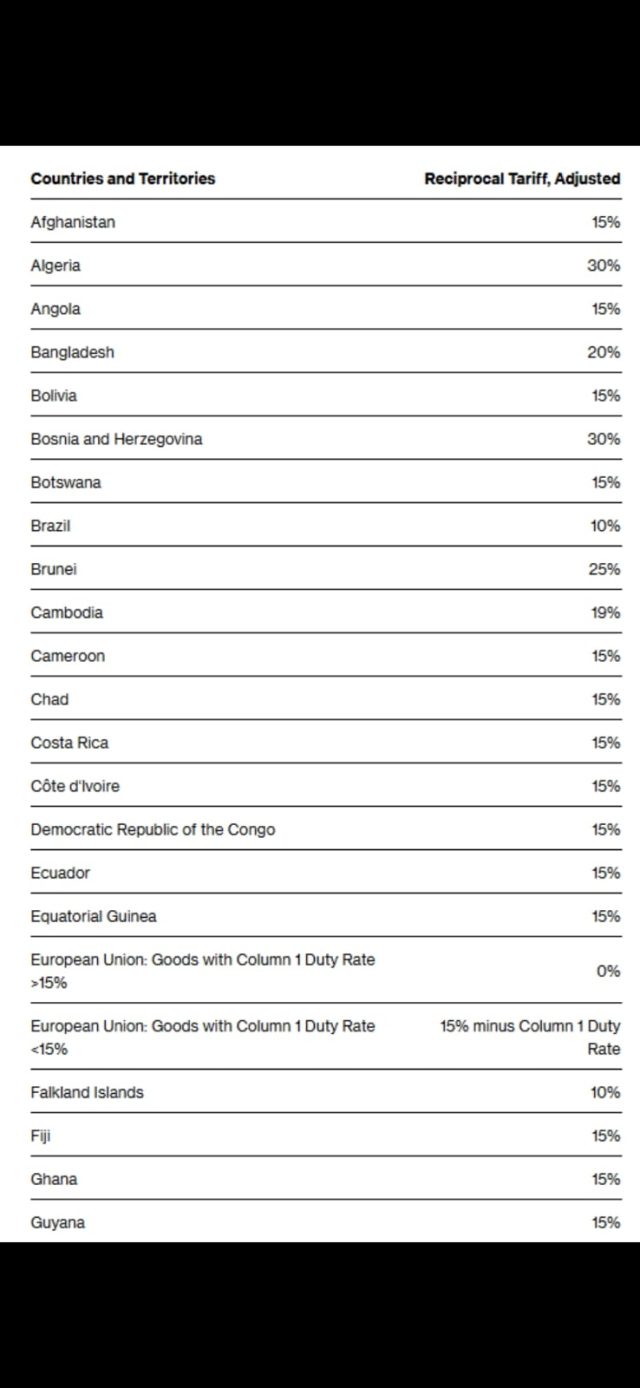
Guyana hit with 15 per cent US tariff as White House unveils sweeping new trade measures

The United States has imposed a 15 per cent reciprocal tariff on imports from Guyana, as part of a sweeping package of trade measures unveiled by the White House just hours ahead of a 1 August deadline for countries to reach new trade agreements with Washington.

The measures—part of what President Donald Trump once dubbed “Liberation Day” tariffs—will take effect in seven days and target dozens of countries that failed to strike deals with the US in time.

While Trump has announced eight bilateral agreements so far, including with the European Union, Japan and the United Kingdom, the full details of those pacts remain unclear.

Few nations have been spared. Canadian imports will face tariffs as high as 35 per cent, among the highest announced. Thailand, which had been slated for a 36 per cent tariff, will now face a reduced 19 per cent duty, aligning it with regional peers such as Indonesia and the Philippines.

Mexico has been granted an additional 90 days to conclude a trade agreement, while Taiwan faces a 20 per cent tariff. It remains unclear whether its semiconductor sector will be subject to additional sector-specific levies.

Tariff rates go as high as 50 per cent on some goods, signaling a major escalation in the administration’s global trade strategy. (This story includes excerpts from the BBC News)


Trump administration tells US diplomats abroad not to opine on foreign elections

U.S. Secretary of State Marco Rubio has instructed U.S. diplomats worldwide not to comment on the fairness or integrity of elections conducted by foreign countries, according to an internal note seen by Reuters on Thursday, in a significant departure from Washington’s traditional approach of promoting free and fair elections overseas.

The order, sent to all U.S. diplomatic posts in a July 17 internal State Department cable, says the Department will no longer issue election-related statements or social media posts from Washington unless there is a “clear and compelling” foreign policy interest.

“When it is appropriate to comment on a foreign election, our message should be brief, focused on congratulating the winning candidate and, when appropriate, noting shared foreign policy interests,” said the cable, which was marked as “sensitive” but not classified.

“Messages should avoid opining on the fairness or integrity of an electoral process, its legitimacy, or the democratic values of the country in question,” it said.

It added that election-related messages should come from either the Secretary himself or the Department spokesperson and it barred U.S. diplomats from issuing such statements without explicit approval from the agency’s senior leadership.

The cable referenced President Donald Trump’s May 13 speech in Riyadh when he criticized what he called “Western interventionists” telling Middle Eastern countries how to govern their own affairs, saying that was no longer Washington’s business and it was looking to forge partnerships.

“While the United States will hold firm to its own democratic values and celebrate those values when other countries choose a similar path, the President made clear that the United States will pursue partnerships with countries wherever our strategic interests align,” the directive said.

When asked about the cable, a State Department spokesperson in emailed comments repeated some of the points in the directive and said that this approach was consistent with the administration’s emphasis on “national sovereignty.”

The United States has traditionally viewed the promotion of human rights and democracy as well as press freedom as a core foreign policy objective, although critics have repeatedly pointed out the double standard Washington has had towards its allies.

Under Trump, the administration has increasingly moved away from the promotion of democracy and human rights, largely seeing it as interference in another country’s affairs. For example, it has moved to reshape the State Department’s human rights bureau, which it said had become a platform for “left-wing activists to wage vendettas against ‘anti-woke’ leaders.”

Trump officials have repeatedly weighed in on European politics to denounce what they see as suppression of right-wing leaders, including in Romania, Germany and France, accusing European authorities of censoring views such as criticism of immigration in the name of countering disinformation. (Reuters)

Trump says Iran and Israel have agreed to ‘complete and total’ ceasefire

President Donald Trump on Monday announced that Israel and Iran have agreed to a “complete and total ceasefire” following days of escalating hostilities. However, neither Israel nor Iran has confirmed the agreement.

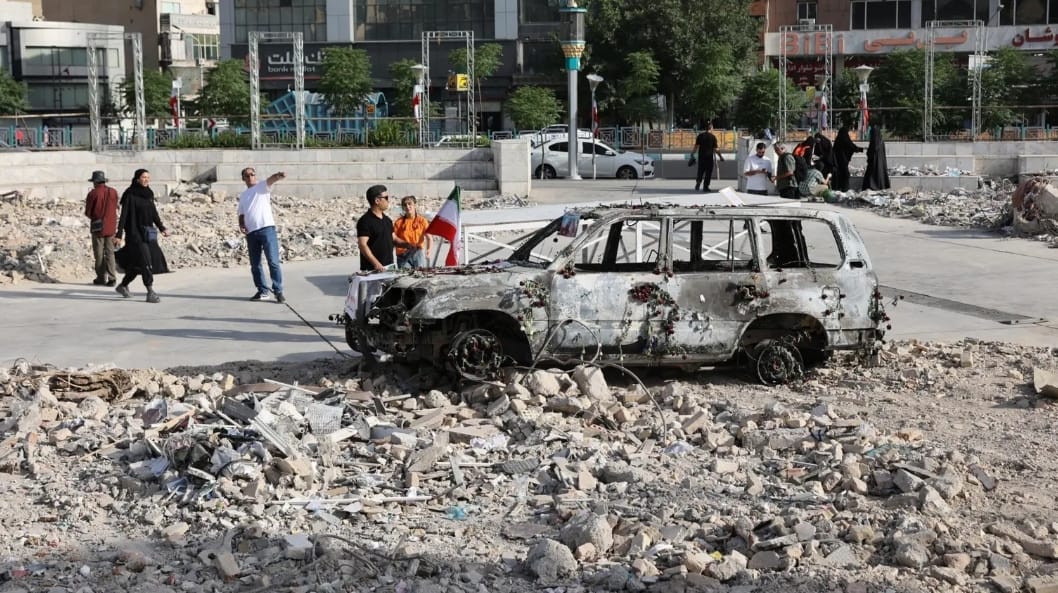
The announcement comes in the wake of a dramatic exchange of military actions that raised fears of a broader regional conflict. On Saturday, the United States launched major strikes against three Iranian nuclear facilities, prompting Tehran to retaliate with a missile barrage targeting the US-run Al Udeid airbase in Qatar.

According to President Trump, the Iranian response resulted in no casualties, and he described the attack as “very weak.” He also thanked Iran for providing “early notice” of the strikes. Qatar confirmed that all incoming missiles aimed at the Al Udeid base were intercepted, condemning the attack as a “flagrant violation.”

“This was clearly a calculated and choreographed response by Iran,” noted BBC Security Correspondent Frank Gardner. “The ball is now in President Trump’s court.”

The Iranian missile attack was seen as a direct response to the US bombardment of its nuclear facilities, which was in turn triggered by reports of accelerated nuclear activity within the Islamic Republic.

Meanwhile, Israel has claimed responsibility for a series of intensified operations against Iranian targets, describing its actions as being carried out with “unprecedented force.” These included strikes on access routes to Iran’s heavily fortified Fordo nuclear site and Evin prison. (BBC News)

Trump can now freely deport migrants to countries not their own

The US Supreme Court cleared the way on Monday for President Donald Trump’s administration to resume deporting migrants to countries other than their own without offering them a chance to show the harms they could face, handing him another victory in his aggressive pursuit of mass deportations.

The justices lifted a judicial order that required the US government to give migrants set for deportation to so-called “third countries” a “meaningful opportunity” to tell officials they are at risk of torture at their new destination, while a legal challenge plays out. Boston-based US District Judge Brian Murphy had issued the order on April 18.

The Supreme Court’s brief order was unsigned and came with no reasoning, as is common when it decides emergency requests. The court has a 6–3 conservative majority.

In a sharply worded dissent, Justice Sonia Sotomayor, joined by the court’s two other liberal justices, criticized the decision, calling it a “gross abuse” of the court’s discretion.

“Apparently, the court finds the idea that thousands will suffer violence in far-flung locales more palatable than the remote possibility that a district court exceeded its remedial powers when it ordered the government to provide notice and process to which the plaintiffs are constitutionally and statutorily entitled,” Sotomayor wrote. “That use of discretion is as incomprehensible as it is inexcusable.”

After the Department of Homeland Security moved in February to step up rapid deportations to third countries, immigrant rights groups filed a class-action lawsuit on behalf of a group of migrants seeking to prevent their removal to such places without notice and a chance to assert the harms they could face.

Murphy, on May 21, found that Trump’s administration had violated his order mandating further procedures in trying to send a group of migrants to politically unstable South Sudan—a country that the US State Department has warned against any travel to “due to crime, kidnapping and armed conflict.”

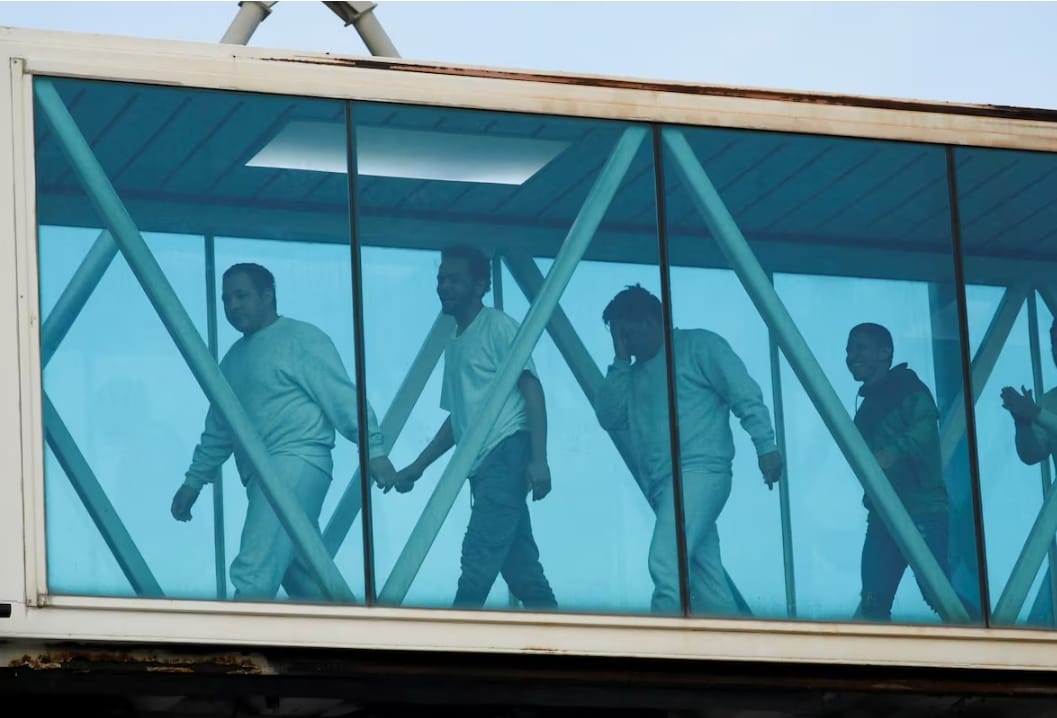
The judge’s intervention prompted the US government to keep the migrants at a military base in Djibouti, although American officials later said one of the deportees, a man from Myanmar, would instead be deported to his home country. Of the other passengers who were on the flight, one is South Sudanese, while the others are from Cuba, Mexico, Laos, and Vietnam.

“The ramifications of (the) Supreme Court’s order will be horrifying,” said Trina Realmuto, executive director of the National Immigration Litigation Alliance, which is helping to represent the plaintiffs.

The decision “strips away critical due process protections that have been protecting our class members from torture and death,” Realmuto said.

Murphy had found that the administration’s policy of “executing third-country removals without providing notice and a meaningful opportunity to present fear-based claims” likely violates due process requirements under the Constitution. Due process generally requires the government to provide notice and an opportunity for a hearing before taking certain adverse actions. (Reuters)

Trump signs ban on travel to US by nationals from 12 countries

United States President Donald Trump has signed an executive order imposing a full travel ban on people from 12 countries and restricting the citizens of seven other countries, the White House said.

The banned countries include Afghanistan, Chad, Congo, Equatorial Guinea, Eritrea, Haiti, Iran, Libya, Myanmar, Somalia, Sudan, and Yemen.

In addition to the ban, which was announced on Wednesday and takes effect on Monday, there will be heightened restrictions on people from Burundi, Cuba, Laos, Sierra Leone, Togo, Turkmenistan, and Venezuela.

“I must act to protect the national security and national interest of the United States and its people,” Trump said in his order.

In a video message released by the White House, Trump said the recent attack on a pro-Israel rally in Boulder, Colorado had “underscored the extreme dangers posed to our country by the entry of foreign nationals who are not properly vetted”.

The president claimed there were “millions and millions of these illegals who should not be in our country”.

“We will not let what happened in Europe happen to America,” he said, adding, “very simply, we cannot have open migration from any country where we cannot safely and reliably vet and screen those who seek to enter the United States”.

“We will not allow people to enter our country who wish to do us harm.” (Al Jazeera)

US trade court rules Trump overstepped his authority with global tariffs

A US federal court has ruled that President Donald Trump overstepped his authority by imposing global tariffs, in a major blow to a key part of his economic policies.

The Court of International Trade ruled that an emergency law invoked by the White House does not provide unilateral authority to impose tariffs on nearly every country.

The Manhattan-based court said the US Constitution gives Congress exclusive powers to regulate commerce with other nations and this is not superseded by the president’s remit to safeguard the ececonomy.

Within minutes of the ruling the Trump administration lodged an appeal.

“It is not for unelected judges to decide how to properly address a national emergency,” White House deputy press secretary Kush Desai said in a statement.

“President Trump pledged to put America First, and the Administration is committed to using every lever of executive power to address this crisis and restore American Greatness,” he added.

The lawsuit, filed by the nonpartisan Liberty Justice Center on behalf of five small businesses that import goods from countries targeted by the duties, was the first major legal challenge to Trump’s so-called “Liberation Day” tariffs.

The case is one of seven legal challenges to the administration’s trade policies, along with challenges from 13 US states and other groups of small businesses.

In the ruling, a three-judge panel said the International Emergency Economic Powers Act (IEEPA), a 1977 law that Trump cited to justify the tariffs, does not give him the power to impose them sweepingly.

“The Worldwide and Retaliatory Tariff Orders exceed any authority granted to the President by IEEPA to regulate importation by means of tariffs. The Trafficking Tariffs fail because they do not deal with the threats set forth in those orders,” they wrote.

Global financial markets have been on a rollercoaster ride since Trump announced the sweeping tariffs on 2 April as some measures were reversed or reduced as the White House negotiated with foreign governments. (BBC News)

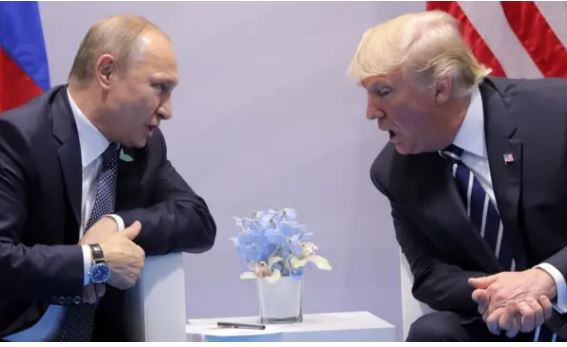
Trump: Russia and Ukraine “will immediately start negotiations toward a ceasefire

US President Donald Trump announced after a two-hour call with Russian President Vladimir Putin that “Russia and Ukraine will immediately start negotiations toward a Ceasefire and, more importantly, an END to the War.”
“The conditions for that will be negotiated between the two parties, as it can only be, because they know details of a negotiation that nobody else would be aware of,” Trump said on Truth Social, adding that the “tone and spirit of the conversation were excellent.”
“Russia wants to do largescale TRADE with the United States when this catastrophic ‘bloodbath’ is over, and I agree. There is a tremendous opportunity for Russia to create massive amounts of jobs and wealth. Its potential is UNLIMITED,” Trump continued. He also said that Ukraine “can be a great beneficiary on Trade.”
Trump said he immediately informed the following leaders about the contents of the call after it ended: Ukrainian President Volodymyr Zelenskyy, President of the European Commission Ursula von der Leyen, French President Emmanuel Macron, Italian Prime Minister Giorgia Meloni, German Chancellor Friedrich Merz and Finnish President Alexander Stubb.
“The Vatican, as represented by the Pope, has stated that it would be very interested in hosting the negotiations. Let the process begin!” Trump added.
Monday’s call with Putin marks the third known time the two leaders have spoken by phone since Trump was inaugurated in January and comes as the US president has grown increasingly frustrated with the Russian president’s refusal to strike a peace deal with Ukraine. (CNN)